
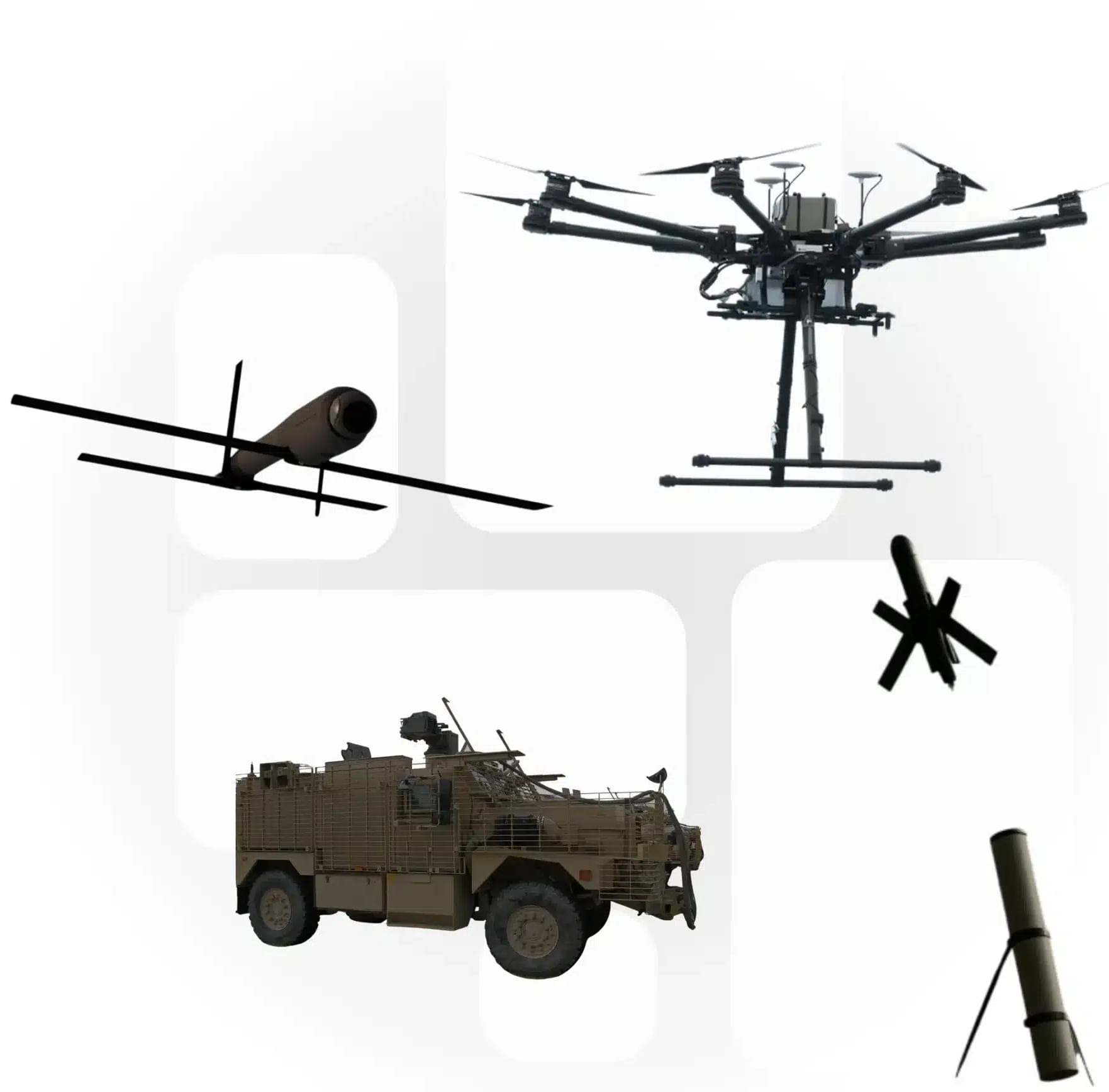
GPS anti-jam technology is designed to protect GNSS receivers from intentional or unintentional radio-frequency interference that disrupts satellite navigation signals. By detecting, filtering, suppressing, or rejecting hostile signals, these systems allow drones, military platforms, autonomous vehicles, and critical infrastructure to maintain accurate positioning and navigation even in electronically contested environments.
As electronic warfare threats continue to evolve, gps anti-jam technology has become a critical component in modern defense systems, UAV operations, and resilient navigation architectures worldwide.
Why GPS Signals Are Vulnerable to Jamming
To understand why gps anti-jam technology is necessary, it is important to first understand how GPS and GNSS systems operate. Satellite navigation signals travel thousands of kilometers from orbiting satellites to receivers on Earth. By the time these signals arrive, they are extremely weak. In many cases, the signal received by a GPS antenna is weaker than the background radio noise naturally present in the environment.
This weakness creates a major vulnerability. A relatively inexpensive jammer transmitting stronger radio-frequency energy can overpower legitimate satellite signals and prevent receivers from calculating accurate positioning, timing, and navigation data.
Modern military operations, commercial drone missions, maritime navigation systems, and autonomous platforms increasingly rely on uninterrupted GNSS access. As a result, GPS jamming has become one of the most common and effective forms of electronic warfare.
GPS interference can occur intentionally or unintentionally. Intentional attacks are often associated with electronic warfare systems, portable jammers, battlefield denial strategies, or hostile anti-drone technologies. Unintentional interference may come from nearby radio systems, poorly shielded electronics, or electromagnetic congestion.
The consequences of GNSS denial can be severe:
- Loss of drone navigation
- Failed autonomous missions
- Maritime route deviations
- Timing disruptions in critical infrastructure
- Reduced targeting accuracy
- Communication synchronization failures
- Airspace safety concerns
Because of these risks, gps anti-jam technology is no longer considered a niche military capability. It is rapidly becoming a baseline requirement for resilient navigation.
What Is GPS Jamming?
GPS jamming is the deliberate transmission of radio-frequency signals intended to interfere with legitimate GNSS communications between satellites and receivers. The attacker overwhelms the receiver with stronger signals, effectively preventing it from locking onto authentic satellite transmissions.
Unlike cyberattacks that target software systems, GPS jamming directly attacks the physical radio layer of navigation systems.
Several types of jamming are commonly used in electronic warfare environments.
Noise Jamming
Noise jamming floods GNSS frequency bands with random RF energy. This type of interference reduces the signal-to-noise ratio and prevents receivers from distinguishing legitimate satellite data.
Barrage Jamming
Barrage jamming targets multiple frequencies simultaneously. This approach is effective against receivers that rely on several GNSS bands such as L1, L2, and L5.
Directional Jamming
Directional jammers focus RF energy toward a specific target or area. These systems are commonly used in anti-drone defense environments.
Sweeping Jamming
Sweeping jammers rapidly move across multiple frequencies to disrupt a broader range of receivers.
Reactive Jamming
Reactive jammers only transmit when they detect GNSS activity, reducing their detectability while increasing operational efficiency.
As modern conflicts demonstrate, GPS jamming is becoming increasingly accessible. Small portable systems can now disrupt drones, vehicles, and navigation equipment from significant distances.
How GPS Anti-Jam Technology Works
GPS anti-jam technology protects navigation systems by identifying and mitigating hostile RF interference while preserving access to legitimate satellite signals. Different solutions use different mitigation techniques depending on mission requirements, platform size, power constraints, and operational environments.
The most advanced systems combine hardware and software capabilities to create layered protection against multiple forms of GNSS interference.
At its core, anti-jamming technology attempts to improve the receiver’s ability to separate authentic satellite signals from hostile interference. Since GPS signals are extremely weak, this process requires sophisticated signal processing and antenna technologies.
Several major approaches dominate the industry today.
RF Filtering
RF filtering removes unwanted frequencies before they reach the receiver. Filters can block known interference ranges while allowing legitimate GNSS frequencies to pass through.
Advantages include:
- Low latency
- Relatively simple integration
- Reduced RF noise
- Compact implementation
However, filtering alone is often insufficient against sophisticated jammers operating directly within GNSS frequency bands.
Adaptive Null Steering
Null steering is one of the most important technologies used in advanced gps anti-jam technology systems. The antenna array dynamically creates “nulls” in the direction of incoming jamming signals while maintaining reception from satellite sources.
This approach allows the system to reject hostile RF energy without completely losing GNSS capability.
Benefits include:
- High interference suppression
- Real-time adaptation
- Effective protection against directional jammers
- Improved operational survivability
Adaptive null steering is commonly associated with CRPA systems used in defense and aerospace applications.
Beamforming Technology
Beamforming uses multiple antenna elements to shape signal reception patterns dynamically. Instead of passively receiving all signals equally, the system prioritizes authentic GNSS sources while suppressing interference.
Beamforming can significantly improve navigation resilience in contested environments.
Digital Signal Processing
Modern gps anti-jam technology increasingly relies on advanced DSP algorithms capable of identifying interference patterns in real time.
These systems may:
- Detect abnormal RF behavior
- Identify interference direction
- Separate legitimate and hostile signals
- Maintain navigation continuity
- Enable rapid mitigation responses
Artificial intelligence and machine learning are beginning to influence this area, especially in adaptive EW environments.
CRPA Systems and Advanced Anti-Jam Architectures
Controlled Reception Pattern Antenna (CRPA) systems represent one of the most advanced categories of gps anti-jam technology currently available.
CRPA systems use multiple antenna elements combined with sophisticated signal processing algorithms to suppress interference spatially. Instead of simply filtering signals, CRPA architectures actively manipulate reception patterns to reject hostile RF sources.
In defense applications, CRPA solutions are widely considered among the most effective methods for operating in GPS-denied or electronically contested environments.
Key CRPA capabilities include:
- Simultaneous multi-satellite tracking
- Spatial interference suppression
- Adaptive null generation
- Directional jammer mitigation
- High operational resilience
However, traditional CRPA systems often come with tradeoffs:
- Higher cost
- Increased SWaP requirements
- Complex integration
- Power consumption challenges
- Platform compatibility limitations
This is particularly important for UAVs and small autonomous systems where size, weight, and power constraints are critical.
Companies such as Infinidome focus on developing low-SWaP gps anti-jam technology solutions specifically designed for drones and compact autonomous platforms. This shift reflects a growing industry demand for lightweight, scalable, and operationally practical anti-jamming systems.
GPS Anti-Jam Technology for Drones and UAVs
The rapid expansion of commercial and military drone operations has dramatically increased the importance of navigation resilience.
Most drones rely heavily on GNSS for:
- Navigation
- Stabilization
- Waypoint missions
- Return-to-home functionality
- Geofencing
- Autonomous flight operations
Without GNSS access, many drones experience degraded performance or complete mission failure.
This vulnerability has made drones primary targets for electronic warfare systems worldwide.
In modern conflict zones, UAV jamming has become extremely common. Commercial drones, tactical UAVs, ISR platforms, and loitering munitions are all exposed to increasing levels of RF interference.
GPS anti-jam technology helps drones maintain operational continuity even in hostile RF environments.
Critical UAV anti-jamming requirements include:
- Low SWaP integration
- Minimal power consumption
- Lightweight hardware
- Real-time mitigation
- Fast signal reacquisition
- Compatibility with commercial flight controllers
- Resistance to multi-directional jamming
Modern drone protection systems must also balance performance with affordability. Traditional military-grade anti-jamming systems are often too expensive or too large for widespread commercial UAV deployment.
This challenge has accelerated innovation in compact anti-jam architectures optimized for unmanned systems.
Military and Defense Applications
Modern defense operations depend heavily on reliable positioning, navigation, and timing systems. GPS anti-jam technology plays a central role in maintaining operational effectiveness across land, air, sea, and autonomous domains.
Military applications include:
- Tactical UAV operations
- ISR missions
- Precision-guided systems
- Maritime navigation
- Armored vehicle navigation
- Border security systems
- Battlefield coordination
- Electronic warfare resilience
In electronically contested environments, GNSS interference may be constant rather than occasional. This reality forces defense organizations to prioritize resilient PNT architectures capable of surviving sustained EW attacks.
Recent conflicts have demonstrated how vulnerable unprotected systems can become under aggressive jamming conditions. Drone failures, navigation disruptions, and degraded targeting capabilities have all highlighted the strategic importance of gps anti-jam technology.
Defense procurement trends increasingly emphasize:
- Low-SWaP architectures
- Multi-layered resilience
- Software-defined mitigation
- Modular integration
- Autonomous adaptation
- Rapid field deployment
As autonomous warfare expands, resilient navigation technologies are expected to become even more critical.
The Importance of Low-SWaP Anti-Jam Systems
SWaP stands for Size, Weight, and Power. These constraints are among the most important considerations in modern aerospace and defense engineering.
Traditional anti-jam systems were often designed for large military platforms with substantial power and integration capacity. However, today’s operational environments increasingly rely on smaller autonomous systems.
This creates a major challenge.
Effective gps anti-jam technology must now provide strong interference protection while remaining:
- Lightweight
- Compact
- Energy efficient
- Cost effective
- Easy to integrate
Low-SWaP solutions are particularly important for:
- Commercial drones
- Tactical UAVs
- Ground robotics
- Portable defense systems
- Maritime autonomous platforms
- Compact ISR payloads
Miniaturization and advanced signal processing are driving major innovations in this field.
Challenges Facing GPS Anti-Jam Technology
Despite significant technological progress, anti-jamming remains a highly complex challenge.
Modern electronic warfare systems continue to evolve rapidly. Attackers increasingly use adaptive, multi-frequency, and intelligent jamming techniques designed to bypass traditional defenses.
Major industry challenges include:
Evolving Threat Complexity
Jammers are becoming:
- More portable
- More affordable
- More intelligent
- Harder to detect
- Capable of multi-band attacks
SWaP Limitations
Small platforms have limited:
- Antenna space
- Power availability
- Thermal management capacity
- Processing resources
Urban RF Congestion
Dense RF environments create additional interference and signal management challenges.
Multi-GNSS Integration
Modern systems often rely on:
- GPS
- Galileo
- GLONASS
- BeiDou
Protecting multiple GNSS constellations simultaneously increases system complexity.
Cost Pressures
Commercial operators require scalable protection without military-level procurement budgets.
The Future of GPS Anti-Jam Technology
The future of resilient navigation will likely involve much more than traditional GNSS protection.
As electronic warfare capabilities become more sophisticated, navigation resilience is evolving toward multi-layered architectures that combine several technologies simultaneously.
Future trends include:
AI-Driven Signal Mitigation
Artificial intelligence may help identify and counter new interference patterns dynamically.
Multi-Sensor Navigation
Platforms increasingly combine:
- GNSS
- Inertial navigation systems
- Vision-based navigation
- Terrain matching
- Signals of opportunity
Autonomous EW Adaptation
Future systems may automatically reconfigure protection strategies based on real-time threat analysis.
GNSS-Independent Navigation
Some next-generation platforms aim to maintain operational continuity even during complete satellite denial.
Distributed Resilience
Swarm systems and collaborative autonomous networks may share navigation data collectively.
Companies operating in the resilient PNT ecosystem are investing heavily in these areas as global demand for navigation survivability continues to grow.
Frequently Asked Questions About GPS Anti-Jam Technology
Can gps anti-jam technology completely stop jamming?
No system can guarantee absolute protection against every possible interference scenario. However, advanced anti-jam systems can significantly improve operational resilience and maintain navigation functionality in many contested environments.
Is anti-jam technology only used by the military?
No. Commercial drones, maritime operators, critical infrastructure providers, and autonomous vehicle developers increasingly use anti-jamming solutions.
What is the difference between CRPA and standard anti-jam antennas?
CRPA systems use multiple antenna elements and adaptive signal processing to suppress interference spatially. Standard antennas typically provide more limited mitigation capabilities.
Can small drones use gps anti-jam technology?
Yes. Low-SWaP solutions are specifically designed for UAV platforms and compact autonomous systems.
Why are GPS signals so easy to jam?
Satellite signals are extremely weak when they reach Earth, making them vulnerable to stronger local RF interference.
What industries rely on resilient GNSS?
Industries include:
- Defense
- Aerospace
- Maritime
- Logistics
- Agriculture
- Energy
- Telecommunications
- Autonomous transportation
Summary
GPS interference has become one of the defining technological and operational challenges of modern navigation systems. As drones, autonomous platforms, and defense systems increasingly depend on uninterrupted GNSS access, the importance of gps anti-jam technology continues to grow across both military and commercial sectors.
From adaptive antennas and CRPA systems to low-SWaP UAV protection architectures, the anti-jamming industry is evolving rapidly to address increasingly sophisticated electronic warfare threats. Modern resilient navigation strategies now combine interference mitigation, signal intelligence, sensor fusion, and autonomous adaptation to improve survivability in contested environments.
Companies such as infiniDome are helping drive this evolution by developing compact, operationally practical GPS anti-jam technology solutions designed for modern drones and autonomous systems. As electronic warfare becomes more accessible worldwide, resilient GNSS protection is rapidly shifting from an advanced capability to a fundamental operational requirement.