Home » GPSdome-SunStone
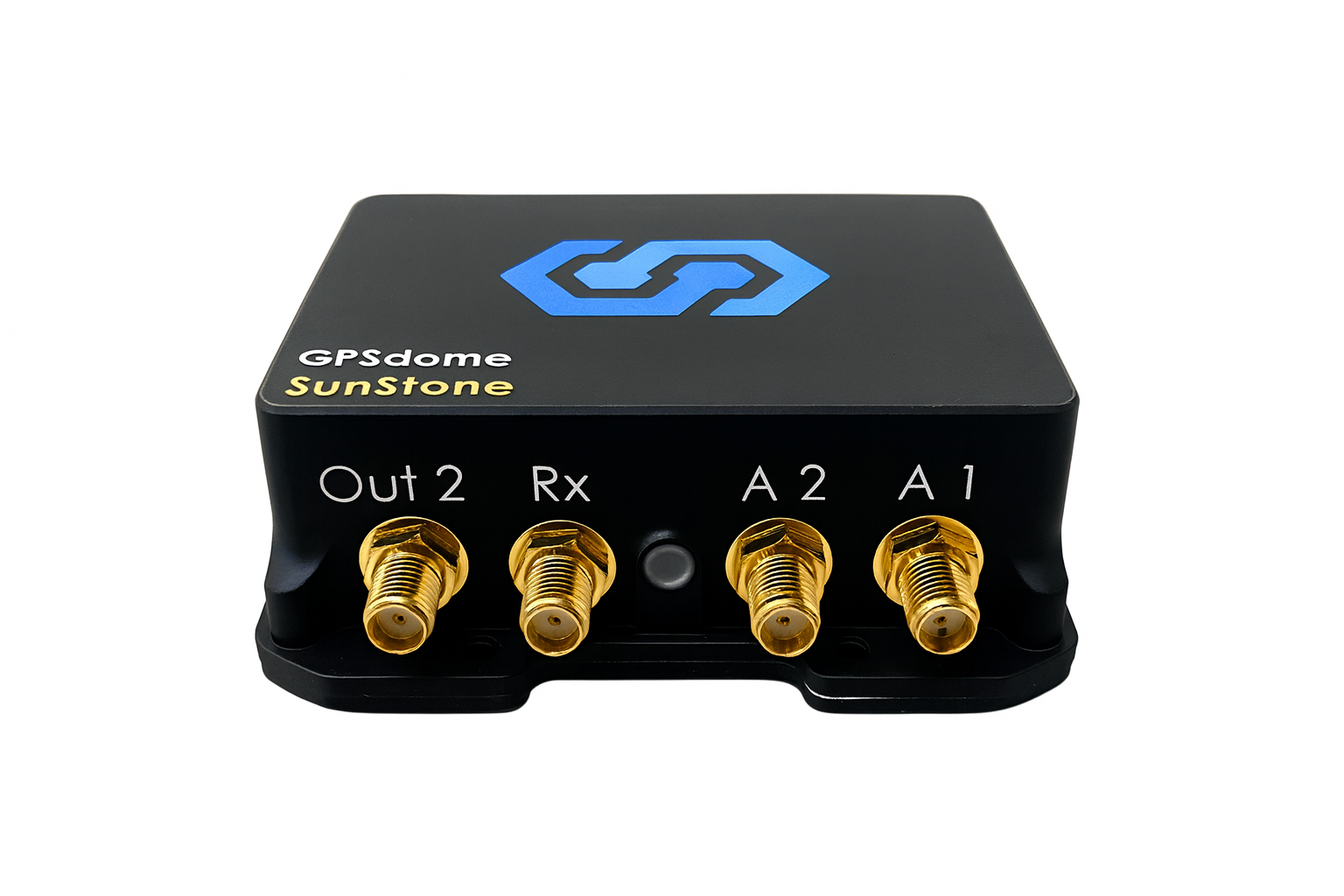
SunStone is a compact and lightweight single-band or dual-band GNSS anti-jamming module designed to protect UAVs, vehicles and autonomous systems operating in GNSS-contested environments. Its low-SWaP architecture, retrofit compatibility and software-defined protection help maintain navigation continuity without replacing the platform’s existing GNSS receiver.
Compact and lightweight | Low power consumption | Retrofit compatible | Software-defined protection
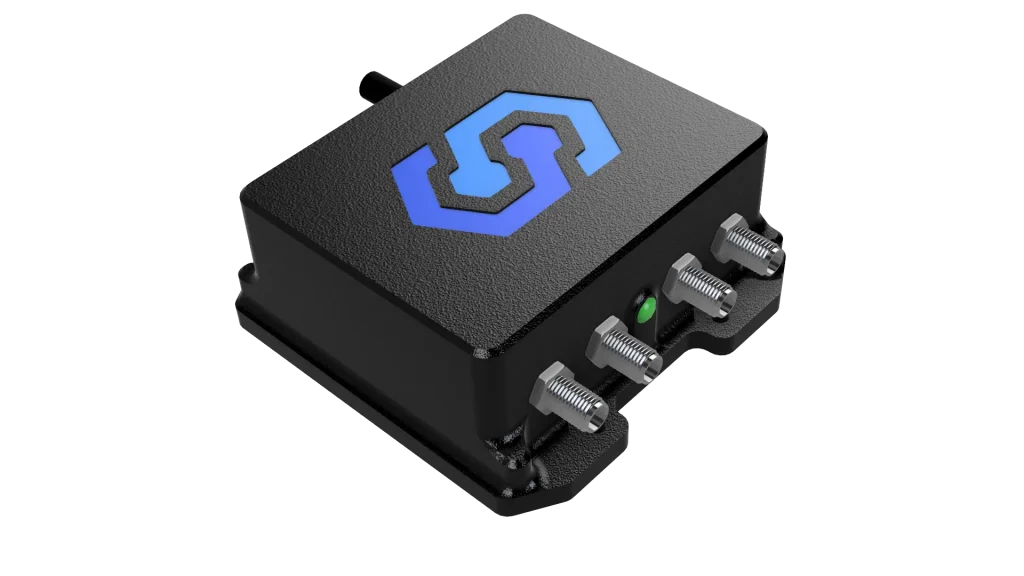
SunStone is a GNSS anti-jamming module developed by infiniDome to help drones, vehicles, maritime platforms and autonomous systems maintain access to satellite navigation during radio-frequency interference. Using advanced null-steering and signal-processing technology, the system suppresses jamming signals while preserving legitimate GNSS reception. It is available in single-band and dual-band configurations to support different platforms, frequency requirements and mission profiles.



Single Band: 80 x 78.5 x 28mm
Dual Band: 80 x 78.5 x 33.5mm
Single Band: 180g
Dual Band: 200g
Compatible with most GNSS receivers and active antennas
IP65 waterproof rating ( Enclosed only)
Automotive temperature grade -40 to +71 Celsius
< 2.7W
L1 and E1/L2/L5/G1
Two additional GNSS bands (chosen by customer when ordered)
100ns ±15ns (fixed)
With proprietary signal filtering technology
GNSS signals are extremely weak by the time they reach a receiver, making them vulnerable to intentional jamming and other sources of radio-frequency interference. Even a relatively low-power jammer can overpower legitimate satellite signals and disrupt positioning, navigation and timing.
SunStone uses proprietary signal filtering and adaptive null-steering technology to identify the direction of incoming interference and reduce reception from that direction. At the same time, the system continues receiving legitimate satellite signals from other directions.
This real-time interference mitigation helps the connected GNSS receiver maintain reliable positioning and navigation in challenging RF environments. Because SunStone is installed as an add-on module, it can enhance the resilience of an existing navigation system without requiring the replacement of the platform’s GNSS receiver.
Size, weight and power consumption are critical considerations for UAVs and other compact autonomous platforms. SunStone delivers advanced GNSS anti-jamming capabilities in a small and lightweight form factor, helping protect navigation without placing an excessive burden on the platform.
SunStone is compatible with most GNSS receivers and active antennas. This allows platform developers and operators to add GNSS interference protection to existing systems while minimizing changes to the original navigation architecture.
The system’s software-defined anti-jamming algorithms are upgradeable, enabling its protection capabilities to evolve in response to changing operational requirements and emerging GNSS threats.
The enclosed version has an IP65 rating and is designed to operate across a temperature range of -40°C to +71°C. This makes it suitable for integration into platforms operating in demanding environmental and operational conditions.
SunStone is designed for platforms that depend on reliable GNSS positioning but have limited space, weight and available power.
The module helps protect GNSS-dependent functions such as waypoint navigation, autonomous flight and route execution. Its compact design makes it particularly suitable for tactical UAVs, compact drones and other unmanned aerial systems.
SunStone can support the navigation resilience of manned and unmanned ground vehicles operating in areas affected by intentional or unintentional GNSS interference.
The system can be integrated into vessels and autonomous maritime platforms that rely on satellite navigation for positioning, route management and mission execution.
SunStone is suitable for systems where continuous access to reliable positioning, navigation and timing data is essential to operational performance.
SunStone is available in single-band and dual-band configurations. The appropriate version depends on the GNSS receiver, protected frequencies, platform limitations and operational requirements.
| Specification | Single Band | Dual Band |
|---|---|---|
| Dimensions | 80 × 78.5 × 28 mm | 80 × 78.5 × 33.5 mm |
| Weight | 180 g | 200 g |
| Protected frequencies | Selected according to configuration | Selected according to configuration |
| Additional passthrough bands | Two customer-selected GNSS bands | Two customer-selected GNSS bands |
The single-band version provides a smaller and lighter configuration for platforms with focused frequency requirements. The dual-band version protects two GNSS bands and is intended for navigation systems that require greater frequency diversity.
infiniDome works with customers to determine the appropriate frequency configuration for each receiver, antenna setup and mission profile.
| Parameter | Specification |
|---|---|
| Available configurations | Single band and dual band |
| Protected frequencies | L1/E1, L2, L5 or G1, depending on configuration |
| Passthrough frequencies | Two additional customer-selected GNSS bands |
| Average power consumption | Less than 2.7 W |
| Latency | 100 ns ±15 ns, fixed |
| Environmental protection | IP65, enclosed version only |
| Operating temperature | -40°C to +71°C |
| Receiver compatibility | Compatible with most GNSS receivers |
| Antenna compatibility | Compatible with active GNSS antennas |
| Protection technology | Proprietary signal filtering and null steering |
| Upgradeability | Software-defined and upgradeable |
Final specifications may vary according to the selected configuration. Contact infiniDome to confirm frequency protection, integration requirements and technical performance for your platform.
SunStone is designed as a retrofit GNSS protection solution. It works alongside the platform’s existing active antennas and GNSS receiver, helping reduce integration complexity and the need for extensive navigation-system redesign.
A typical integration connects the GNSS antenna array to SunStone, which processes the received signals before transferring them to the existing GNSS receiver. The exact setup depends on the selected configuration, antenna placement and platform architecture.
Technical documentation, CAD files and integration support are available to help engineering teams evaluate and install the system.
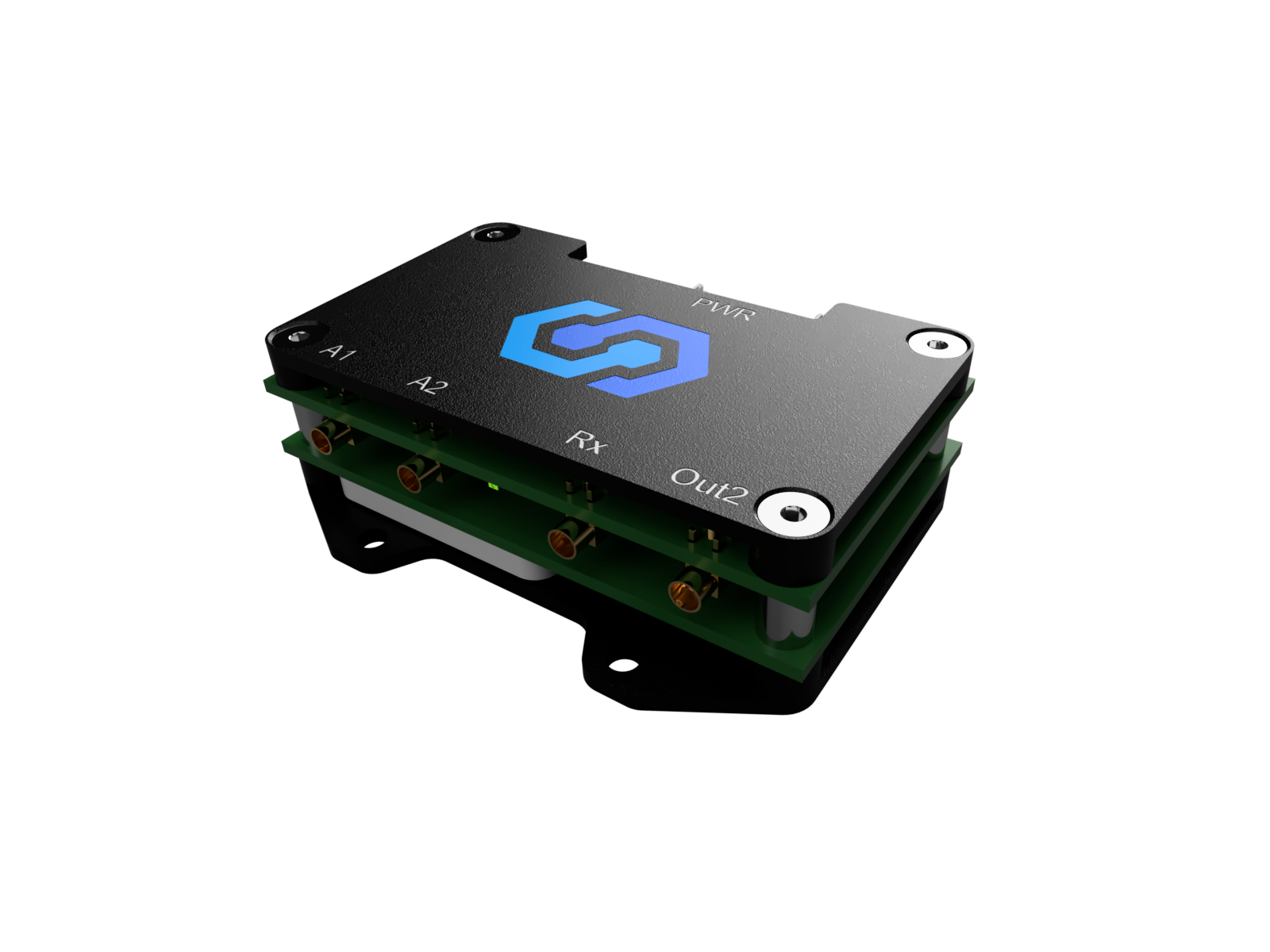
The enclosed SunStone provides a protected, integration-ready solution for platforms operating in harsh environments. For manufacturers requiring deeper integration and an even smaller footprint, SunStone is also available as an OEM module.
The appropriate option depends on the required environmental protection, available installation space, platform design and production requirements.
Yes. SunStone is designed as a retrofit module and is compatible with most existing GNSS receivers and active antennas. Compatibility should be confirmed based on the platform’s specific receiver, frequencies and antenna architecture.
The system uses proprietary signal processing and null-steering technology. It reduces reception from the direction of incoming interference while preserving access to legitimate GNSS satellite signals.
Yes. Its compact dimensions, low weight and low power consumption make it suitable for UAVs and other platforms with strict SWaP limitations. The final configuration should be selected according to the drone’s payload, power and frequency requirements.
The single-band configuration protects one selected GNSS band and offers lower weight and height. The dual-band version protects two bands, providing broader frequency protection for compatible navigation systems.
Available protected frequencies include L1/E1, L2, L5 and G1, depending on the ordered configuration. Two additional customer-selected GNSS frequencies can pass through the system without protection.
Every UAV, vehicle and autonomous system has different GNSS frequencies, SWaP limitations and integration requirements. infiniDome can help determine the right SunStone configuration for your platform and operational environment.
We love optimism, but GNSS interference is rapidly escalating worldwide, disrupting entire industries and rendering even the most advanced systems unreliable.
Let’s talk about how you can protect your application and mission before interference cuts you off when it matters most.