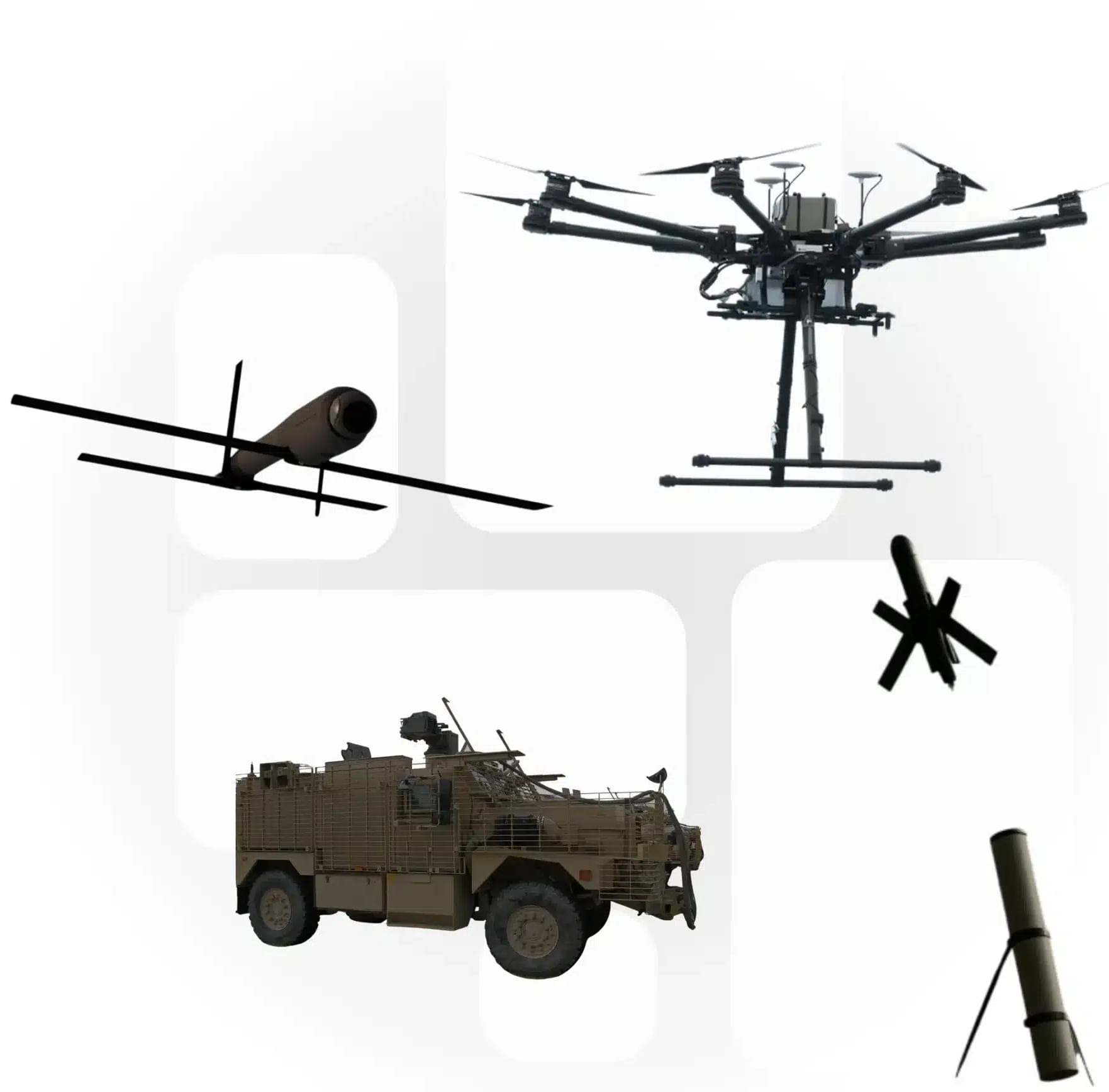
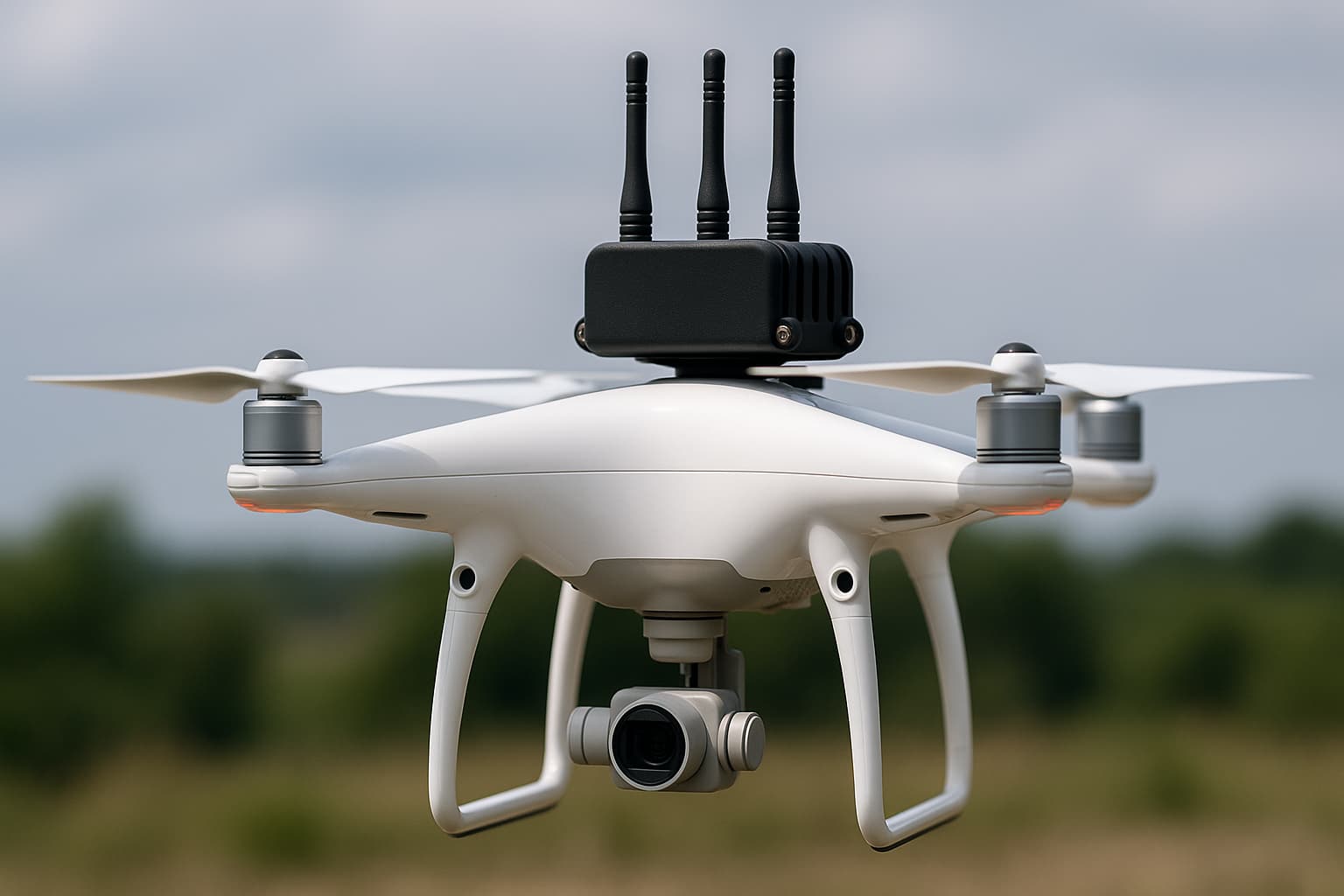
An anti jamming device for drone is an advanced electronic system designed to protect a drone’s GPS or GNSS navigation from deliberate or accidental signal interference. By filtering, nullifying, or redirecting hostile radio energy, anti jamming devices ensure that UAVs maintain accurate positioning, stable navigation, and mission reliability even under GPS attacks.
Table of Contents
What Causes GPS Jamming in Drones?
Modern drones depend heavily on satellite navigation systems like GPS, Galileo, GLONASS, and BeiDou. However, these signals are extremely weak when they reach the Earth’s surface – often below the noise floor. This makes them highly vulnerable to jamming (signal overpowering) and spoofing (false signal injection).
Jamming can be intentional – used by hostile actors, smugglers, or military forces – or unintentional, caused by malfunctioning transmitters or nearby radio interference. In either case, once GPS is disrupted, the drone may lose orientation, drift off course, or even crash. This is why anti jamming devices have become an essential component for any UAV operating in contested or high-risk environments.
How Do Anti Jamming Devices Work?
An anti jamming device mitigates interference by analyzing incoming satellite signals and dynamically suppressing or ignoring those that don’t match the legitimate GNSS pattern. The most effective systems use Controlled Reception Pattern Antennas (CRPA) – multi-element antennas that can “steer nulls” toward jamming sources while maintaining gain toward satellites.
The process happens in microseconds:
- The device detects abnormal power spikes or patterns in specific directions.
- The digital processor generates a cancellation pattern.
- This pattern creates a “null” (a direction of low antenna sensitivity) toward the interference source.
- The drone continues to receive valid satellite data from other directions.
This real-time protection allows drones to fly confidently even in dense or hostile RF environments, preserving position accuracy and mission integrity.
Main Technologies Behind Anti Jamming Devices
There are several architectures and methods used in advanced anti jamming devices for drones. Each offers different balance between performance, weight, and cost:
- CRPA (Controlled Reception Pattern Antenna):
Uses multiple antenna elements to spatially filter interference and steer nulls in the direction of the jammer. - Digital Signal Processing (DSP) Filters:
Suppress unwanted frequency bands or modulation types associated with jamming sources. - Sensor Fusion with INS (Inertial Navigation System):
Combines GNSS data with accelerometer and gyroscope readings to maintain navigation when signals degrade. - Adaptive Nulling Algorithms:
Dynamically update in real time as the jammer or drone changes position. - Multi-constellation, Multi-band Operation:
Allows simultaneous use of GPS, Galileo, BeiDou, and GLONASS across L1/L2/L5 bands to improve resilience.
infinidome’s patented technology combines several of these approaches, providing high GNSS integrity with minimal weight and power consumption – perfectly optimized for UAV platforms.
Key Performance Metrics to Consider
When evaluating or comparing anti jamming devices, engineers should focus on several measurable parameters:
- J/S Ratio (Jam-to-Signal):
The higher the ratio the system can withstand, the more resistant it is. Top-tier systems survive +40 dB or more. - Number of Nulls:
Defines how many simultaneous jammers can be mitigated (typically 1–3 nulls for compact CRPAs). - Frequency Bands Supported:
L1, L2, and L5 bands; multi-constellation compatibility improves reliability. - SWaP (Size, Weight, Power):
Critical for drones – usually under 200 g and 3 W for small UAV modules.
Interface and Integration:
Compatibility with flight controllers (UART, CAN, Ethernet) and existing GNSS receivers.
How to Choose the Right Anti Jamming Device for Drone
Selecting the right solution depends on the mission profile and platform type. Lightweight commercial drones require compact modules with minimal power draw, while defense-grade UAVs need multi-band, multi-null protection.
When comparing solutions, consider:
- Operational Environment:
Urban vs rural, near airports, border areas, or military zones. - Mission Duration:
Longer missions need efficient power consumption and heat management. - Integration Complexity:
Plug-and-play devices vs OEM modules requiring configuration. - Budget and Export Limitations:
Some high-end devices may fall under ITAR/EAR restrictions.
An ideal anti jamming device for drone strikes a balance between protection, size, and affordability – exactly where Infinidome’s systems stand out.
Real-World Applications and Case Studies
Anti jamming technology is no longer a “nice-to-have”; it’s mission-critical across multiple industries.
Commercial delivery drones rely on stable GPS to navigate complex urban corridors. Agricultural UAVs require precise GNSS for spraying and mapping. In defense, UAVs must survive deliberate jamming on the battlefield.
In a recent field test, Infinidome’s GPSdome 2 maintained full GNSS lock in environments with more than +30 dB jamming power, allowing the drone to complete its mission successfully while competitors lost navigation within seconds. This demonstrates the operational difference that a well-designed anti jamming device can make in real conditions.
Integration and Regulatory Considerations
Integrating an anti jamming device requires understanding both hardware and compliance aspects.
From the hardware side, engineers must ensure proper antenna placement, isolation, and grounding to avoid mutual interference. Calibration of null steering is also critical for optimal protection.
From the regulatory side, users should confirm local radio emission and export laws. Anti jamming devices are passive, but their companion test equipment may fall under defense regulations. Infinidome provides full compliance documentation and support for commercial and government customers worldwide.
Frequently Asked Questions about Anti Jamming Devices
What’s the difference between GPS jamming and spoofing?
Jamming blocks signals with noise; spoofing imitates them with false data. Advanced anti jamming devices can detect and filter both.
Can I install an anti-jamming device on any drone?
Most small UAVs can integrate modular anti-jamming devices through standard interfaces, though payload capacity and power must be verified.
How much does an anti-jamming device for a drone cost?
Entry-level modules start around a few hundred dollars, while professional systems with CRPA can reach several thousand, depending on performance.
Does an anti-jamming device also protect against spoofing?
Some advanced models combine jamming and spoofing detection using signal authentication and direction-finding algorithms.
Why choose infiniDome?
infiniDome specializes exclusively in GNSS protection, offering compact, field-proven anti-jamming devices that balance top-tier performance with minimal SWaP impact.
Conclusion
As drones become integral to logistics, defense, agriculture, and infrastructure inspection, GNSS protection is no longer optional. A single interference event can mean lost missions, damaged equipment, or compromised safety.
infiniDome’s anti-jamming devices provide reliable, field-tested defense against GNSS jamming and spoofing – empowering UAVs to navigate confidently even in the harshest RF environments.
Want to protect your drone fleet?
Contact infiniDome today for a demo, integration guide, or OEM partnership discussion.