
From autonomous vessels to carbon-capture missions, the ocean has become the next front for GPS interference.
The open sea was once considered the most stable navigation environment. But in the last few years, it has turned into one of the most unpredictable. Ships across the Black Sea, Eastern Mediterranean, and even the Red Sea have reported widespread GNSS disruptions – sometimes lasting hours, sometimes days. These interferences don’t just threaten commercial routes; they endanger safety, data integrity, and even environmental missions.
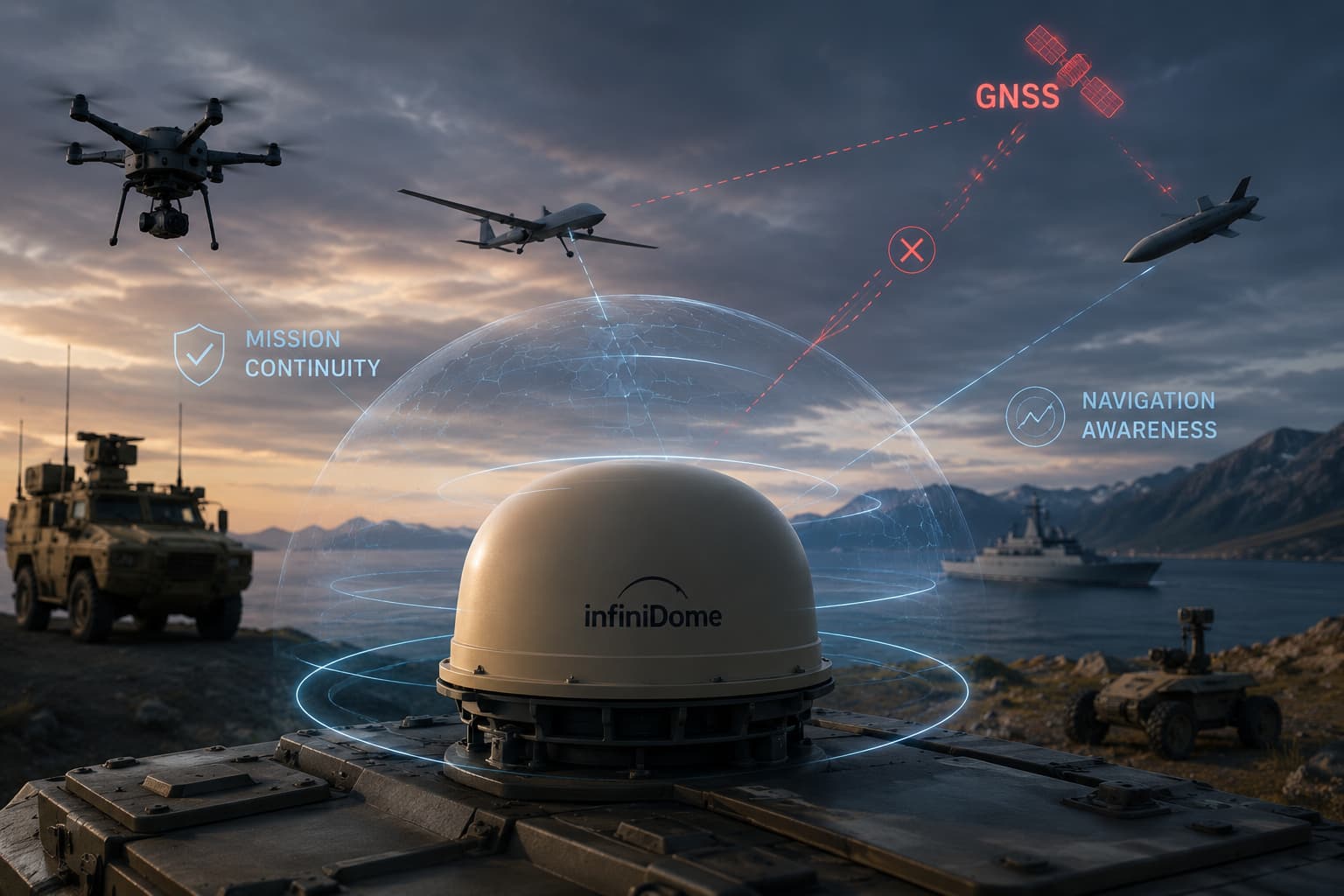
At infiniDome, we’ve seen how maritime and scientific operations now face the same interference challenges as military systems. In 2024, our technology played a crucial role in the Rewind’s marine carbon-removal experiment, ensuring that data-collection vessels maintained precise positioning and communication despite heavy RF activity near coastal zones.
Maritime operators are starting to recognize that GNSS protection isn’t a defense-only issue. Offshore energy platforms, autonomous boats, and ocean-mapping systems all depend on continuous navigation and timing. A few seconds of jamming can lead to lost data, operational drift, or even physical danger.
Our systems, such as SunStone, are compact enough to integrate into small vessels yet powerful enough to defend against high-power jammers. They don’t just maintain positioning; they ensure mission continuity, even when the ocean turns silent above the satellites.
As maritime industries move toward autonomy, resilient navigation is becoming as vital as radar.