Upcoming Events

Latest news

Europe 2025 - When Interference Becomes the New Normal

Europe 2025: When Interference Becomes the New Normal

GNSS interference across Europe is no longer an exception; it’s becoming the environment we operate in.

In 2025, Europe is facing a challenge that was once reserved for conflict zones: GPS and GNSS interference. Reports show thousands of interference events recorded across the continent, from the Baltic to the Mediterranean. Pilots, drone operators, and maritime navigators are learning that loss of GPS is no longer rare. It’s routine.

At infiniDome, we’ve been following this trend closely. The rise in jamming and spoofing isn’t only a military concern – it’s a commercial one. Critical sectors like logistics, aviation, railways, and agriculture all depend on satellite-based navigation. When those signals fail, operations freeze.

This is exactly why we develop and continuously evolve our GNSS protection systems. Our goal is to ensure that even when interference becomes the new normal, navigation continuity remains guaranteed. Systems like GPSdome2, SunStone, and Resilient Navigation System are already protecting UAVs and vehicles across Europe, enabling them to stay on course even in high-interference zones.

The reality is clear: Europe’s skies are changing. Resilience is not an upgrade; it’s a necessity.

→ Learn more about how infiniDome protects navigation across interference-heavy regions.

GNSS protection

What Is GNSS Protection and Why Is It Critical for Modern Navigation Systems?

GNSS protection refers to the set of technologies and strategies designed to defend satellite-based navigation systems from interference, jamming, and spoofing. As positioning, navigation, and timing (PNT) services have become vital to defense, aviation, and autonomous mobility, ensuring GNSS interference protection is no longer optional – it’s essential for operational safety and continuity.

What Is GNSS and Why Is It Vulnerable?

GNSS (Global Navigation Satellite System) is the backbone of modern navigation and timing. It includes satellite constellations like GPS (US), Galileo (EU), GLONASS (Russia), and BeiDou (China), which provide real-time location data to billions of users.

Yet, despite its global importance, GNSS is inherently fragile. The signal received from satellites, traveling over 20,000 kilometers to Earth, is extraordinarily weak – often comparable to background noise levels. This makes GNSS highly susceptible to intentional and unintentional interference. Even a small jammer can overpower the authentic signal, disrupting navigation and positioning systems across wide areas.

As modern military and commercial operations depend increasingly on precise timing and navigation, the need for effective GNSS interference protection has never been greater.

What Does GNSS Protection Include?

GNSS protection is not a single product but a multi-layered concept combining hardware, software, and intelligence to ensure resilience against interference. It encompasses several technological domains that work together to secure the PNT signal chain.

At its core, GNSS protection combines Anti-Jamming and Anti-Spoofing mechanisms with signal authentication, threat detection, and resilience algorithms that enable a platform to maintain situational awareness even under attack.

Modern GNSS interference protection systems can:

  • Detect abnormal signal environments in real time.

  • Identify the source and type of interference.

  • Suppress or mitigate jamming signals through beamforming or spatial filtering.

  • Distinguish between legitimate and fake (spoofed) GNSS signals.

  • Maintain continuity of navigation using alternative or hybrid sensors (e.g., INS, odometry, vision).

This layered approach turns GNSS protection into a full “defense shield” for resilient navigation.

GNSS Anti-Jamming vs. GNSS Protection

Although the terms are often used interchangeably, GNSS Anti-Jamming and GNSS protection describe different scopes of defense.

Anti-Jamming focuses on one specific threat: denial of service caused by strong RF noise that blocks satellite signals. It uses advanced antenna arrays, beamforming, and filtering techniques to suppress interference.

GNSS protection, on the other hand, goes beyond suppression-it provides situational awareness, detection, and recovery. It enables a system to recognize when it is under attack, to differentiate between jamming and spoofing, and to take adaptive measures that ensure the integrity of navigation data.

In short:

  • Anti-Jamming = Keeps the signal alive.

  • GNSS Protection = Keeps the mission safe.

Types of GNSS Interference and Attacks

The threat landscape surrounding GNSS is broad and rapidly evolving. Adversaries and even civilian sources can unintentionally or deliberately disrupt navigation signals.

The main categories include:

  • Jamming: High-power RF signals that overwhelm legitimate GNSS frequencies, rendering receivers unable to lock onto satellites.

  • Spoofing: Deceptive transmissions that mimic authentic GNSS signals, tricking receivers into reporting false positions or times.

  • Meaconing: Rebroadcasting delayed GNSS signals to shift the perceived location of a platform.

  • Unintentional Interference: Signals from nearby communication or radar systems that accidentally overlap GNSS bands.

The increasing accessibility of low-cost jammers and spoofers on the commercial market poses an escalating risk not only to defense but also to civil aviation, autonomous vehicles, and logistics operations.

infiniDome’s GNSS Protection Solutions

infiniDome has become a global leader in GNSS protection and GNSS interference protection, providing cutting-edge systems designed to safeguard platforms operating in GPS-challenged environments.

The company’s solutions are built upon years of field-proven experience in defense, UAV, and infrastructure projects across Israel, Europe, India, and North America. infiniDome’s technology suite combines compact form factors, low power consumption, and exceptional resilience—tailored for aerial, ground, and maritime platforms alike.

Key product highlights include:

SunStone, AuraCore: Compact anti-jamming units offering multi-directional protection for small UAVs, UGVs, and vehicles.

Aura: Advanced protection for larger platforms requiring dual-antenna configurations and enhanced spatial filtering.

Resilient Navigation Systems: Integrated solutions combining Anti-Jamming, Inertial navigation module, and sensor fusion for full navigation continuity.

Each system is designed for rapid integration, scalability, and compliance with defense and aerospace standards.

Defense, UAV, and Commercial Applications

The importance of robust GNSS interference protection spans multiple domains.

In defense and security, it ensures mission continuity for tactical vehicles, unmanned aerial systems (UAS), guided munitions, and command centers. Maintaining accurate PNT data in contested environments can determine mission success or failure.

For UAV and commercial platforms, GNSS protection enables safe operation in complex environments where interference is increasingly common—airports, seaports, or urban areas with high RF noise. It also underpins the growth of autonomous mobility by providing reliable navigation even when satellite signals are degraded or spoofed.

Applications include:

Military vehicles, drones, and naval vessels.

Critical infrastructure and timing synchronization.

Autonomous delivery and ground robotics.

Surveying, precision agriculture, and mining operations.

Across all these fields, infiniDome’s technologies provide unmatched situational awareness and resilience.

Integration with CRPA and Resilient Navigation Systems

Advanced GNSS protection often integrates with CRPA (Controlled Radiation Pattern Antenna) systems, INS (Inertial Navigation Systems), and complementary sensors.

This hybrid approach-known as Resilient PNT-ensures navigation continuity even in fully denied GNSS environments.

infiniDome’s architecture supports interoperability with existing CRPA arrays and inertial systems, providing a seamless fusion of data that enhances accuracy and reliability. As part of a broader resilience framework, GNSS protection becomes the first line of defense within a multi-sensor navigation ecosystem.

FAQ about GNSS Protection 

GPS is one satellite constellation; GNSS encompasses all global systems (GPS, Galileo, GLONASS, BeiDou). GNSS protection defends against interference across all of them.

Not completely. They block interference but don’t detect spoofing or analyze threat patterns-true GNSS protection combines both.

Integration with CRPA and Resilient Navigation Systems

Military jammers, commercial devices, communication transmitters, and intentional spoofers all contribute to interference risks.

Any platform relying on precise positioning-defense systems, drones, transportation fleets, and critical infrastructure-requires protection to ensure reliability and safety.

Conclusion

We are entering an era where GNSS interference is not an exception-it is the environment. Ensuring robust GNSS protection is vital to maintaining trust in autonomous systems, secure defense operations, and critical global infrastructure.

infiniDome’s field-proven, compact, and intelligent GNSS interference protection systems set a new standard in navigation resilience. As threats evolve, infiniDome continues to redefine what secure, uninterrupted PNT means for the modern world.→ Learn more about infiniDome’s GNSS protection technologies or request a demo today.

Anti Jamming Device for Drone

What Is an Anti Jamming Device for Drone and Why Every UAV Needs One?

An anti jamming device for drone is an advanced electronic system designed to protect a drone’s GPS or GNSS navigation from deliberate or accidental signal interference. By filtering, nullifying, or redirecting hostile radio energy, anti jamming devices ensure that UAVs maintain accurate positioning, stable navigation, and mission reliability even under GPS attacks.

Table of Contents

What Causes GPS Jamming in Drones?

Modern drones depend heavily on satellite navigation systems like GPS, Galileo, GLONASS, and BeiDou. However, these signals are extremely weak when they reach the Earth’s surface – often below the noise floor. This makes them highly vulnerable to jamming (signal overpowering) and spoofing (false signal injection).

Jamming can be intentional – used by hostile actors, smugglers, or military forces – or unintentional, caused by malfunctioning transmitters or nearby radio interference. In either case, once GPS is disrupted, the drone may lose orientation, drift off course, or even crash. This is why anti jamming devices have become an essential component for any UAV operating in contested or high-risk environments.

How Do Anti Jamming Devices Work?

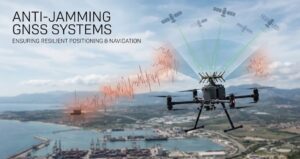
An anti jamming device mitigates interference by analyzing incoming satellite signals and dynamically suppressing or ignoring those that don’t match the legitimate GNSS pattern. The most effective systems use Controlled Reception Pattern Antennas (CRPA) – multi-element antennas that can “steer nulls” toward jamming sources while maintaining gain toward satellites.

The process happens in microseconds:

  • The device detects abnormal power spikes or patterns in specific directions.
  • The digital processor generates a cancellation pattern.
  • This pattern creates a “null” (a direction of low antenna sensitivity) toward the interference source.
  • The drone continues to receive valid satellite data from other directions.


This real-time protection allows drones to fly confidently even in dense or hostile RF environments, preserving position accuracy and mission integrity.

Main Technologies Behind Anti Jamming Devices

There are several architectures and methods used in advanced anti jamming devices for drones. Each offers different balance between performance, weight, and cost:

  • CRPA (Controlled Reception Pattern Antenna):
    Uses multiple antenna elements to spatially filter interference and steer nulls in the direction of the jammer.
  • Digital Signal Processing (DSP) Filters:
    Suppress unwanted frequency bands or modulation types associated with jamming sources.
  • Sensor Fusion with INS (Inertial Navigation System):
    Combines GNSS data with accelerometer and gyroscope readings to maintain navigation when signals degrade.
  • Adaptive Nulling Algorithms:
    Dynamically update in real time as the jammer or drone changes position.
  • Multi-constellation, Multi-band Operation:
    Allows simultaneous use of GPS, Galileo, BeiDou, and GLONASS across L1/L2/L5 bands to improve resilience.


infinidome’s patented technology combines several of these approaches, providing high GNSS integrity with minimal weight and power consumption – perfectly optimized for UAV platforms.

Key Performance Metrics to Consider

When evaluating or comparing anti jamming devices, engineers should focus on several measurable parameters:

  • J/S Ratio (Jam-to-Signal):
    The higher the ratio the system can withstand, the more resistant it is. Top-tier systems survive +40 dB or more.
  • Number of Nulls:
    Defines how many simultaneous jammers can be mitigated (typically 1–3 nulls for compact CRPAs).
  • Frequency Bands Supported:
    L1, L2, and L5 bands; multi-constellation compatibility improves reliability.
  • SWaP (Size, Weight, Power):
    Critical for drones – usually under 200 g and 3 W for small UAV modules.

Interface and Integration:
Compatibility with flight controllers (UART, CAN, Ethernet) and existing GNSS receivers.

How to Choose the Right Anti Jamming Device for Drone

Selecting the right solution depends on the mission profile and platform type. Lightweight commercial drones require compact modules with minimal power draw, while defense-grade UAVs need multi-band, multi-null protection.

When comparing solutions, consider:

  1. Operational Environment:
    Urban vs rural, near airports, border areas, or military zones.
  2. Mission Duration:
    Longer missions need efficient power consumption and heat management.
  3. Integration Complexity:
    Plug-and-play devices vs OEM modules requiring configuration.
  4. Budget and Export Limitations:
    Some high-end devices may fall under ITAR/EAR restrictions.

An ideal anti jamming device for drone strikes a balance between protection, size, and affordability – exactly where Infinidome’s systems stand out.

Real-World Applications and Case Studies

Anti jamming technology is no longer a “nice-to-have”; it’s mission-critical across multiple industries.

Commercial delivery drones rely on stable GPS to navigate complex urban corridors. Agricultural UAVs require precise GNSS for spraying and mapping. In defense, UAVs must survive deliberate jamming on the battlefield.

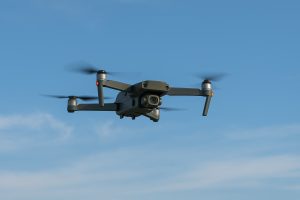
In a recent field test, Infinidome’s GPSdome 2 maintained full GNSS lock in environments with more than +30 dB jamming power, allowing the drone to complete its mission successfully while competitors lost navigation within seconds. This demonstrates the operational difference that a well-designed anti jamming device can make in real conditions.
Integration and Regulatory Considerations

Integrating an anti jamming device requires understanding both hardware and compliance aspects.

From the hardware side, engineers must ensure proper antenna placement, isolation, and grounding to avoid mutual interference. Calibration of null steering is also critical for optimal protection.

From the regulatory side, users should confirm local radio emission and export laws. Anti jamming devices are passive, but their companion test equipment may fall under defense regulations. Infinidome provides full compliance documentation and support for commercial and government customers worldwide.

Frequently Asked Questions about Anti Jamming Devices

Jamming blocks signals with noise; spoofing imitates them with false data. Advanced anti jamming devices can detect and filter both.

Most small UAVs can integrate modular anti-jamming devices through standard interfaces, though payload capacity and power must be verified.

Entry-level modules start around a few hundred dollars, while professional systems with CRPA can reach several thousand, depending on performance.

Some advanced models combine jamming and spoofing detection using signal authentication and direction-finding algorithms.

infiniDome specializes exclusively in GNSS protection, offering compact, field-proven anti-jamming devices that balance top-tier performance with minimal SWaP impact.

Conclusion

As drones become integral to logistics, defense, agriculture, and infrastructure inspection, GNSS protection is no longer optional. A single interference event can mean lost missions, damaged equipment, or compromised safety.

infiniDome’s anti-jamming devices provide reliable, field-tested defense against GNSS jamming and spoofing – empowering UAVs to navigate confidently even in the harshest RF environments.

Want to protect your drone fleet?

Contact infiniDome today for a demo, integration guide, or OEM partnership discussion.

how to protect drone from jamming

How to Protect Drone from Jamming – Complete Guide to UAV Security

Wondering how to protect a drone from jamming in today’s contested skies? The answer lies in combining advanced anti-jamming systems, resilient navigation technologies, and best practices for operators. In this detailed guide, we explain what jamming is, how it impacts UAVs, and the most effective strategies to secure your drones against interference.

What does GPS jamming mean for drones?

GPS jamming is the deliberate blocking of satellite signals used by drones for navigation. By overpowering weak satellite transmissions with stronger interference signals, attackers can deny a UAV its positional awareness.

For drones, this is more than a technical hiccup. It can mean losing control, veering off course, or even crashing. Whether for commercial deliveries, defense reconnaissance, or critical infrastructure inspections, knowing how to protect a drone from jamming is essential to mission safety and reliability.

Why knowing how to protect a drone from jamming is critical

Every drone operator today faces the reality that jamming devices are affordable and widely available. This means even small-scale actors can disrupt UAV missions. The threat is no longer confined to high-level military operations but extends to civilian drones as well.

By learning how to protect drones from jamming, organizations safeguard not only their hardware but also sensitive data, operational continuity, and the trust of their customers or partners.

Common protection methods explained

Over the years, several techniques have been introduced to shield drones from jamming:

  • Controlled Reception Pattern Antennas (CRPA): Smart antennas that nullify interference by steering reception away from the jammer.

  • Multi-frequency GNSS receivers: Devices using GPS, Galileo, GLONASS, and BeiDou together for redundancy.

  • Inertial Navigation Systems (INS): Backup navigation using gyroscopes and accelerometers when GPS is denied.

  • Sensor fusion: Combining GPS with cameras, radar, or LiDAR for enhanced reliability.

  • Signal anomaly detection: Alerting operators when interference is suspected.

The limits of traditional anti-jamming approaches

While these tools are useful, none fully solve the problem alone. CRPA solutions can be bulky and expensive. INS drifts over time without GPS corrections. Multi-constellation receivers still fail under powerful jammers. Sensor fusion adds complexity and cost.

This shows why advanced, drone-specific anti-jamming solutions are necessary for those who truly want to know how to protect drone from jamming effectively.

Advanced technologies that really work

Infinidome offers compact, field-proven systems such as GPSdome and GPSdome2 that directly mitigate interference. Unlike bulky legacy solutions, these systems are designed specifically for UAVs – lightweight, energy efficient, and easy to integrate.

They filter out jamming signals while allowing real GPS signals to pass, ensuring drones remain operational even in highly contested environments. For anyone serious about how to protect drone from jamming, these solutions represent a breakthrough in resilience.

Best practices and proven use cases

Beyond technology, operators should follow structured practices to reduce risks:

  • Equip drones with tested anti-jamming systems.

  • Train teams to recognize signs of interference quickly.

  • Conduct flight planning with awareness of high-risk zones.

  • Keep drone firmware updated to close vulnerabilities.

  • Run regular exercises simulating jamming scenarios.

Use cases include:

  • Defense missions where UAVs face hostile jamming.

  • Commercial delivery drones navigating dense cities.

  • Critical infrastructure inspection in sensitive areas.

  • Agricultural UAVs operating near interference-prone zones.

Questions and Answers

It is the blocking of satellite navigation signals, making drones lose their position.

Because jamming can cause drones to crash, lose data, or fail missions.

Yes. With proper anti-jamming systems, even commercial drones can resist interference.

Jamming blocks signals, while spoofing feeds false location data to the drone.

They combine advanced filtering with small size and low power consumption, making them ideal for UAVs of all types.

Conclusion

Learning how to protect drone from jamming is vital for anyone relying on UAV technology. Traditional methods alone are not enough to counter today’s evolving threats. With infiniDome’s advanced anti-jamming solutions, drones remain resilient, secure, and mission-ready even in contested environments.

Secure your UAV operations today. Contact infiniDome to discover how our GPS protection systems can keep your drones flying safely when it matters most.

GPS Anti-Jamming Technology

What is GPS Anti-Jamming Technology and How Does it Work?

GPS anti-jamming technology is designed to protect critical positioning, navigation, and timing (PNT) systems from intentional interference that blocks or distorts satellite signals. By detecting, mitigating, and filtering out malicious disruptions, gps anti jamming ensures reliable operations for defense, aviation, drones, vehicles, and infrastructure that rely on GNSS.

Add Your Heading Text Here

GPS jamming occurs when a transmitter deliberately emits signals on the same frequency as GNSS satellites, overwhelming the weak signals reaching Earth. Since satellite transmissions are extremely low-power, even a cheap jammer can block GPS reception within a wide radius.

This interference poses risks for both civilian and military applications. From navigation apps in smartphones to flight paths in aircraft and autonomous drone missions, disruption of GNSS signals can lead to loss of situational awareness, accidents, and mission failure. That is why gnss anti jamming is no longer optional but a necessity.

Why is GPS Anti-Jamming Essential Today?

Global reliance on GNSS has increased exponentially. Transportation, logistics, telecommunications, and defense all depend on precise location and timing. At the same time, jamming devices have become cheaper and more widely available, creating both accidental and deliberate threats.

Anti jamming technology protects critical infrastructure by ensuring continuous service even in contested environments. For armed forces, it provides mission assurance. For commercial aviation and drones, it prevents navigation failures. And for critical infrastructure such as energy or telecom networks, it ensures stability and resilience.

How Does GPS Anti-Jamming Work?

How does gps anti-jamming work? The answer lies in advanced signal processing and specialized antennas. Anti jamming systems analyze incoming signals, identify sources of interference, and suppress or cancel them while preserving legitimate satellite signals.

Core GPS Anti Jamming Techniques Explained

There are several proven gps anti jamming techniques currently deployed in defense and commercial systems:

  • Directional Antennas – focus reception toward satellites while minimizing exposure to ground-based jammers.
  • CRPA Antennas – steer multiple beams electronically to isolate valid signals and cancel interference.
  • Digital Signal Processing (DSP) – filter out suspicious noise and maintain GNSS integrity.
  • Integration with INS (Inertial Navigation Systems) – maintain navigation when satellite signals are degraded.
  • Multi-constellation GNSS – leverage GPS, Galileo, GLONASS, and BeiDou to increase resiliency.

These layers of defense work together in a robust anti jam system that ensures continuity even under attack.

Anti Jamming Technology in Action - Practical Applications

Anti jamming gnss solutions are used in many sectors, from military to civilian –

  • Defense and Military – Protecting aircraft, ground vehicles, and naval assets in contested environments.
  • UAVs and Drones – Ensuring reliable navigation for both surveillance and delivery drones.
  • Aviation – Preventing navigation disruption that could endanger flights.
  • Maritime – Protecting ships and offshore platforms from spoofing and jamming attacks.
  • Critical Infrastructure – Safeguarding telecom networks, power grids, and financial systems that rely on GNSS timing.

Key Challenges and Limitations

While gps anti-jam technology is powerful, it faces several challenges. High-end systems like CRPA can be expensive, heavy, and power-hungry, making them less practical for small UAVs. In addition, sophisticated jammers are evolving, forcing anti jamming technology to continuously adapt. Balancing cost, size, and performance is one of the biggest hurdles in widespread adoption.

The Future of GPS Anti-Jam Systems

The future of gps anti jamming will be defined by smaller, lighter, and smarter solutions. Advances in AI-based interference detection, cloud-based data fusion, and integration of resilient PNT (Positioning, Navigation, Timing) will expand protection to civilian markets. More accessible, cost-effective anti jam systems will soon be available not just for defense but also for commercial aviation, logistics, and autonomous mobility.

FAQ on GNSS Anti Jamming

Jamming blocks signals, while spoofing deceives a receiver with fake GNSS data.

It uses special antennas and algorithms to filter out interference while keeping genuine satellite signals intact.

Yes, many solutions are modular and can be integrated as add-on devices.

Defense, aviation, drones, and critical infrastructure operators are primary users.

They are highly effective against most jammers, but ongoing development is needed to counter more advanced techniques.

Conclusion

As reliance on GNSS grows, so does the threat of intentional interference. GPS anti-jam technology ensures continuity, resilience, and security for both defense and civilian applications. From advanced CRPA antennas to adaptive filtering, gps anti jamming is becoming a cornerstone of modern navigation and timing systems. Organizations adopting strong anti jam systems today are better prepared for the challenges of tomorrow.

If your operations depend on GNSS reliability, investing in proven anti jamming technology is no longer optional – it is essential for mission success and operational safety.

InfiniDome - Showcases Proven GNSS Protection at DSEI

InfiniDome – Showcases Proven GNSS Protection at DSEI

Following its recent success in India, where its anti-jamming systems ensured reliable UAV operations under extreme GNSS interference, infiniDome is now bringing the same solutions to Europe at the DSEI exhibition in London. Tested by major defense contractors and the Indian military, the company’s technology has demonstrated superior resilience compared to unprotected UAVs and competing solutions.

With the rise of BVLOS operations in logistics, infrastructure, and defense, infiniDome positions navigation resilience as essential to mission continuity and profitability.

Read the full article in German: InfiniDome auf der DSEI: Schnelle Reaktion und GNSS-Schutz

InfiniDome and Cavemus Bring GNSS Protection to Europe

infiniDome and Cavemus Bring GNSS Protection to Europe

Israeli company infiniDome has partnered with German consultancy Cavemus Systems Association to bring proven GNSS protection and navigation resilience solutions for drones to the European market. The collaboration will ensure seamless integration, regulatory compliance, and local support for both defense and commercial UAV operators.

At this year’s DroneDays, infiniDome highlighted the often-overlooked economic impact of GNSS disruptions. Navigation failures can lead to missed deliveries, canceled inspection flights, equipment damage, and even legal liabilities, with industry estimates suggesting costs up to ten times higher than the original UAV investment.

Through lightweight and compact GNSS protection technology, infiniDome aims not only to safeguard drones but also to secure entire business models that depend on reliable UAV operations. As Amir Rabinovitz, VP of Customer Success at infiniDome, explained:

“Our European customers are not just buying technology, they are buying continuity – the ability to deliver services even under challenging conditions.”

With the EU’s growing emphasis on BVLOS operations for logistics, infrastructure, and defense, resilient navigation is no longer optional but a fundamental requirement. For UAV operators, investing in fail-safe navigation is about safeguarding profitability and mission success.

Read the full article in German here: infiniDome und Cavemus bringen GNSS-Schutz nach Europa

anti jamming

What is GNSS Jamming and How Does Anti-Jamming Work?

GNSS (GPS) jamming is the intentional disruption of satellite signals that are critical for positioning, navigation, and timing. It prevents devices such as drones, vehicles, and critical infrastructure from receiving GPS data, leading to lost signals or incorrect location information. Anti-jamming technology is designed to detect and block these threats, ensuring continuous and secure GPS-based operations.

What is GPS Jamming?

GPS jamming refers to the act of blocking or interfering with the radio signals that GPS receivers rely on. These signals originate from satellites orbiting approximately 20,000 kilometers above Earth and are naturally very weak by the time they reach the ground. Even a low-power jammer – a small, inexpensive electronic device – can overpower these signals and render the receiver useless.

This type of interference has grown in prevalence due to the easy availability of low-cost jamming devices online. A GPS jammer can be purchased and deployed in seconds, disrupting GPS signals over a surrounding area.

How Does GNSS Jamming Work?

A GPS jammer transmits signals at the same frequency as GPS satellites but at a higher power. This makes it impossible for the GPS receiver to distinguish between the legitimate signal and the interference. The receiver is overwhelmed and fails to provide accurate positioning data.

Common jamming techniques include:

  • Continuous Wave (CW) – Constant signal broadcast on GPS frequencies

  • Sweep/Barrage – Rapid frequency shifts to block a broader spectrum

  • Directional Jamming – Targeted interference aimed at a specific platform

All of these approaches aim to interrupt or completely block access to reliable positioning data.

Real-World Examples of GNSS Jamming

GNSS jamming is no longer a theoretical risk. In military zones such as Syria, Ukraine, and even along the U.S.–Mexico border, jamming is used routinely to block drones and GPS-reliant systems.

In the Middle East, radar and flight systems are facing an escalating wave of interference, with GPS jammers becoming increasingly prevalent. Military and civilian aircraft have reported a sharp rise in navigation disruptions, compromising both safety and operational efficiency. These interferences – often linked to criminal or military activity – can overwhelm radar systems, create false targets, and degrade data integrity.

This growing trend underscores why GPS security is no longer optional – it is essential.

Why GNSS Security Matters for UAVs and Defense Systems

Unmanned systems, especially UAVs, depend heavily on GPS for navigation. When jamming occurs, a drone may:

  • Drift off course or crash

  • Lose communication with the operator

  • Fail to reach its destination

In military or border security contexts, this can lead to mission failure or even endanger human lives. GPS security ensures these systems remain operational, even in contested environments.

Understanding GNSS Anti-Jamming Technology

Anti-jamming encompasses the technologies used to detect, isolate, and reduce the impact of GPS interference. Solutions may be hardware-based, software-defined, or a hybrid of both.

Common components include:

  • Multi-element antennas to sense the direction of interference

  • Signal-processing algorithms to cancel out jamming sources

  • Integration with inertial navigation systems (INS) to bridge short-term GPS outages

The goal is always the same: maintain GPS signal integrity under attack.

How Does Anti-Jamming Work?

GNSS jamming disrupts navigation by overpowering the weak signals from satellites with strong, malicious transmissions. To counter this, GPS anti-jamming devices continuously analyze incoming radio signals, identifying patterns that reveal interference.

One of the most common mitigation techniques is null steering. In simple terms, the system creates a “null” – a zone of silence – in the direction of the detected interference. This suppresses the jamming signal while still allowing legitimate satellite signals from other directions to be received. Null steering is effective in many scenarios but has limitations: it typically works best against a single interference source and cannot address all GNSS threats, such as spoofing or complex multi-directional jamming.

Advanced solutions, like infiniDome’s GPSdome series, extend protection beyond null steering. They combine it with enhanced detection, filtering, and mitigation capabilities, enabling the system to:

  • Detect and counter up to three simultaneous jamming sources

  • Operate on dual frequency bands (L1/L2 or L1/G1) for redundancy and precision

  • Deliver protection with ultra-low latency (~100ns) – critical for high-speed platforms

  • Retrofit easily onto existing UAVs, vehicles, or stationary platforms without major redesigns

This multi-layered approach ensures uninterrupted navigation and mission continuity, even in complex, high-threat environments where basic null steering would not suffice.

Comparing CRPA and Null Steering

Both CRPA (Controlled Reception Pattern Antennas) and null steering are used in GPS protection:

  • CRPA uses advanced antenna arrays to form beams and reject interference, but it is often bulky, expensive, and suited mainly for large platforms such as military aircraft.

  • Null steering works with simpler hardware, can be integrated into compact devices, and is cost-effective for drones and smaller platforms.

While CRPA offers powerful capabilities for certain applications, null steering remains the preferred choice for smaller tactical systems – especially when enhanced with multi-layered protection.

Choosing the Right GNSS Protection for Your Needs

When selecting an anti-jamming solution, consider:

  • Platform type: UAV, UGV, autonomous vehicle, etc.

  • Threat environment: Are you operating in GPS-contested zones?

  • Size, weight, and power (SWaP) constraints: Small drones can’t carry large systems.

  • Number of jamming sources: One or multiple?

  • Frequency bands: L1, L2, L5, G1, etc.

Solutions like GPSdome2 and SunStone are designed with these factors in mind, offering scalable protection for mission-critical operations.

FAQ about GPS Anti-Jamming

To protect GPS-based navigation and timing systems from intentional or accidental signal disruption.

Symptoms include GPS signal loss, erratic movement, failure to hold position, or complete navigation failure.

It can’t be entirely eliminated, but the right anti-jamming technology can drastically reduce its impact.

Jamming blocks GPS signals entirely. Spoofing sends fake signals to mislead the receiver

In most countries, no. GPS jammers are illegal to use, sell, or operate without authorization

Conclusion

GPS jamming is a growing threat to autonomous systems and mission-critical operations. It works by overwhelming weak satellite signals, cutting off accurate positioning data.

To counter this, modern anti-jamming technologies – combining null steering, multi-band filtering, and real-time detection – are essential. Products like GPSdome2 and SunStone deliver compact, lightweight, and battle-proven protection.

If your operation relies on GNSS – for drones, vehicles, or infrastructure – investing in GPS security is not a luxury. It’s a necessity.

infiniDome Expands its India Footprint, Offers Latest Anti-Jamming Module

Israeli company InfiniDome has enhanced its activity in India to answer the dramatic growing demand for systems that protect from GPS denial.
As modern warfare expands beyond traditional domains into the invisible spectrum of electronic warfare, India faces a growing threat: GNSS (GPS) interference.

India’s UAV progress threatened by GNSS jamming; infiniDome offers solutions

India’s UAV progress threatened by GNSS jamming; infiniDome offers solutions

India continues to make significant progress in developing indigenous unmanned aerial vehicles, loitering munitions, and autonomous systems. However, many of these platforms face a critical vulnerability: their reliance on unprotected satellite navigation. This threat is no longer theoretical.

the gps denial dilemma

The GPS-Denial Dilemma: Israeli Solutions For Autonomous Military Systems

The conflict between Israel and Iranian proxies in Gaza and Lebanon, which began on October 7, 2023, served as a wake up call to the vulnerability of GPS-based navigation systems in military operations. During this conflict, as both Hezbollah and Israel simultaneously disrupted GPS signals, the urgent need for autonomous systems to be resilient against such interference became apparent. As the Israeli Defense Forces (IDF), and militaries globally, continue to expand their use of autonomous systems, GPS immunity has become a top priority. Several Israeli companies have answered the call.

Case Study: Field-Proven GNSS Resilience for ISR Global’s Vehicle Monitoring Platform

Background:

In recent years, insurance companies have required vehicle monitoring systems as a condition for theft coverage. These systems rely on GNSS (GPS) to report real-time location data.

Criminals have adapted by using GNSS jammers to disable tracking, enabling vehicle theft without detection. This growing threat affects not only private luxury vehicles but also commercial trucks, delivery fleets, heavy machinery, and other high-value assets, leading to major financial and operational losses.

The Challenge:

ISR Global, a leading provider of tracking solutions for vehicles and heavy machinery, supplies these GPS-based monitoring systems to meet insurance requirements. While effective under normal conditions, these systems were vulnerable to jamming attacks, jeopardizing both the security of the vehicle and the validity of the insurance policy.

ISR Global sought to enhance its solution by integrating anti-jamming protection, ensuring its trackers would continue to function in real-world theft scenarios involving GNSS attacks.

The Solution:
To assess GNSS jamming resilience, a two-phase field test compared a standard ISR Global tracker with the same system enhanced by anti-jamming protection.

Phase 1: Unprotected System
A vehicle with a standard tracker was monitored by the control center. When a GNSS jammer was activated nearby, location data briefly appeared, but only engine status was transmitted. Once the jammer was placed inside the vehicle, the GPS signal was completely lost, even during a 1 km drive.

Phase 2: Protected System
The vehicle was then equipped with a tracker featuring anti-jamming protection and dual GPS antennas, alongside the unprotected unit. When jamming resumed, the standard tracker failed again, while the protected system maintained continuous real-time tracking, demonstrating full GNSS resilience under interference.

The Result:
The trial proved the clear advantage of integrating anti-jamming protection into ISR Global’s tracking system.
While the unprotected tracker lost positioning under jamming, the enhanced system maintained full GNSS functionality and real-time location reporting throughout the test, despite active interference from within the vehicle.
The results confirm that anti-jamming technology turns vulnerable trackers into resilient, theft-resistant monitoring tools, ensuring continuous operation when it matters most.

Case Study: GNSS Resilience for National Land Survey of Finland

Background:
Finland has significantly intensified its efforts to secure reliable navigation in contested environments. The National Land Survey of Finland (NLS), a key entity responsible for national mapping and geospatial capabilities, is leading a major initiative to validate and deploy GNSS protection technologies that can ensure operational continuity in GPS/Galileo-denied conditions.
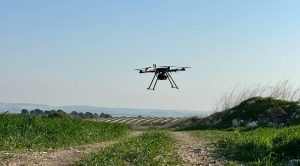
Working in collaboration with our Finnish partner Cyberior, infiniDome was invited to conduct system integration and field demonstrations.

The Challenge:
In a region increasingly vulnerable to GNSS jamming, the challenge was to deliver lightweight, field-deployable anti-jamming solutions that could be integrated quickly and tested in real-world scenarios. The NLS project demanded validated performance, simple installation, and compatibility with future national-scale deployments, all within tight technical and regulatory constraints.

The Solution:
infiniDome’s engineering team conducted on-site system integration and demonstration flights with NLS, installing GPSdome2 and SunStone on active UAV platforms. Both systems were tested under GPS-contested environments to verify their robustness, effectiveness, and ease of deployment.

Additional technical activities included calibration for E5b signal compatibility and optimization of the transition zone.

The Result:
The field testing confirmed the robustness and effectiveness of infiniDome’s GNSS protection solutions under real-world, interference-heavy conditions. Both the GPSdome2 and SunStone maintained uninterrupted satellite connectivity, successfully mitigating jamming threats and preserving navigation integrity throughout the test flights.
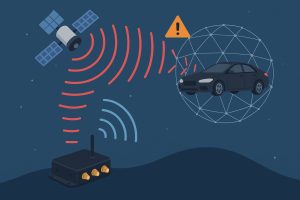
This validation further strengthens infiniDome’s position as a trusted provider of resilient navigation technologies, capable of supporting mission-critical operations across Europe, where demand for reliable, lightweight, and easily integrable GNSS protection is rapidly increasing in response to evolving electronic warfare challenges.

Case Study: How Rewind Ensures Accurate Carbon Storage in Anoxic Zones

Background:
Rewind is a marine terrestrial biomass storage company advancing a natural, scalable solution to remove atmospheric CO₂ and mitigate climate change. Their method uses trees to capture CO₂ and convert it to organic carbon, while deep, oxygen-free waters preserve it for geological time scales. This long-term approach not only reduces atmospheric CO₂ but also aligns with natural carbon cycles, offering a sustainable sequestration solution. At Rewind’s Epsilon pilot site, precision navigation is essential for deploying biomass, conducting environmental monitoring, and ensuring regulatory compliance—tasks that require reliable, uninterrupted positioning systems in remote areas with potential GNSS interference.

The Challenge:
Rewind faced persistent GNSS jamming at the Epsilon site, causing frequent navigation disruptions. This interference, from nearby signal jamming sources, led to partial or complete GPS loss. The impact was significant, halting deep-sea data sampling for months until the GPS signal was restored. These disruptions affected both the operational timeline and cost efficiency, with delays impacting resource allocation and project momentum.

The Solution:
To address this, Rewind collaborated with infiniDome to test the GPSDome2 anti-jamming system.
Testing was conducted on two vessels—a small boat and a larger ship—both equipped with the GPSDome2. The smaller vessel set out from Haifa harbor to the Epsilon site, enduring substantial jamming but successfully reacquiring GPS positioning once in a clearer zone. On the larger ship, where GPSDome2 was directly integrated with the vessel’s navigation system, positioning remained stable throughout, even in high-interference areas.

The Result:
The GPSDome2 system effectively maintained GNSS positioning in interference-heavy environments once an initial GPS fix was obtained. In both tests, it held stable data beyond 2.5 km offshore in minimal interference zones. After total signal loss from jamming, GPSDome2 quickly reacquired positioning upon entering a low-interference zone, allowing accurate navigation back to the Epsilon site. Integrating GPSDome2 into the ship’s navigation system provided real-time tracking and minimized operational disruptions, reducing potential economic impacts.
This successful test confirmed GPSDome2 as a reliable anti-jamming solution, enabling Rewind to operate safely and efficiently in interference-prone zones.

infiniDome’s New Anti-Jamming Module Gains Momentum in the U.S. Defense Market

infiniDome’s latest anti-jamming solution, GPSdome-SunStone, is gaining momentum among leading U.S. defense and commercial UAV companies as it undergoes testing with major industry players—perfectly timed ahead of the company’s showcase at Xponential Texas in Houston this May and its strategic expansion with the launch of infiniDome Solutions” in the U.S.

InfiniDome to Unveil New System ‘GPSdome-SunStone’ at Xponential Europe 2025

Tel Aviv: Israeli company InfiniDome is launching a new system to deal with GPS denial technologies used widely around the world. The unmanned systems market is evolving rapidly, with many platforms across various industries relying on GNSS signals for navigation, positioning, and timing.

In the defence sector, which leads the adoption of autonomous applications and UAVs in particular, the strategic approach has undergone a significant transformation. On today’s dynamic battlefield, the focus has shifted from relying on expensive, complex drones to deploying fleets of smaller, faster, and more cost-effective UAVs that can be mass-produced and scaled for wide-reaching operations.

infiniDome Signs Contract with a European Customer for its Anti-Jamming Solutions

Tel Aviv: The heavy use of GPS denial in Ukraine and in the war between Israel and Hezbollah, the Iranian proxy in Lebanon, has increased the demand for protection systems that enable GPS navigation systems to operate without any disturbance.

Israeli company infiniDome has recently signed another contract with a European customer and according to Noam Turgeman, marketing specialist, the interest is growing in many countries.
“All solutions are fully retrofit, making them ideal for protecting almost any platform, without the need for major modifications in the platforms,” the company official stated.

Meet Our New Generation of Anti Jamming, GPSdome-SunStone.

We are thrilled to launch our new resilience navigation solution, GPSdome-SunStone.

This groundbreaking solution offers the most advanced anti jamming technology available to date, optimized to face the most current threats in the battlefield today and field upgradeable to meet future threats tomorrow.

infiniDome Secures Major Deal in Western Europe

Third Purchase by Key Western European Customer Underscores the Critical Need for infiniDome’s GPS Protection Amid Rising Global Threats.

infiniDome, a leading provider of GNSS protection and resilient navigation solutions, announces a significant new deal with a key customer in Western Europe. This marks the third purchase from this esteemed customer, emphasizing the growing trust and demand for infiniDome’s advanced technology. The deal includes more than 1,000 units, reinforcing infiniDome’s position as a global leader in navigation protection. This milestone follows infiniDome’s recent announcement of battle-proven capabilities demonstrated during the conflicts in Israel and Ukraine, where GPS electronic warfare attacks were and are a significant and growing threat.

infiniDome showcases battlefield-proven GPS protection & resilience – By Satnews

infiniDome has recently experienced a significant increase in demand, mainly due to the issue that has escalated over the past two years — GNSS interferences has become a critical concern in conflict zones, such as Israel, Ukraine, and many parts of Europe.


The company’s extensive experience on the battlefield, particularly in recent conflicts in Israel and Europe, has positioned infiniDome’s products as trusted and reliable navigation resiliency solutions defending UAVs and other platforms.

Infini Dome’s newest solution — GPSdome2 — is officially recognized for its battlefield readiness and offers flexible GNSS protection of two bands (L1/E1+L2 or L1 + G1 or L1/E1 + L5) from as many as three directions of simultaneous jamming, all in a small box. The unit is C-SWaP (Cost, Size, Weight, and Power) optimized and fully retrofit, making it ideal for protecting almost any platform, even small Class II UAVs, without the need for major modifications.

How To Enable Critical UAV Operations in a GPS-contested World?

The landscape of Electronic Warfare has changed, find out about the challenges and the solutions of protecting navigation capabilities.

A lecture by infiniDome’s CEO, Omer Sharar, in the Unmanned Aerial Vehicle conference in Jerusalm, July 1. 

Birthday (3) (1)

מפרוץ המלחמה: כ-6000 רחפנים התרסקו עקב שיבושי GPS

הפתרון הטכנולוגי לבעיית שיבושי ה-GPS עליו מדברת אטיאס, הוא של חברת אינפינידום (infiniDome) מקיסריה. החברה פיתחה יחד עם חברת הענק האמריקנית, האניוול – משקיעה ושותפה באינפינידום – מערכת הגנה רב שכבתית על כטב”מים ורחפנים, מפני שיבושי GPS.

ישראל היום

הסוף לשיבושי ה-GPS: הישג טכנולוגי ישראלי בצפון

במסגרת ניסוי שנערך ליד בית החולים זיו שבצפת, הודגם פתרון טכנולוגי המאפשר לרחפנים להמשיך לטוס כמתוכנן גם תחת מעטה כבד של שיבושי GPS • השיבושים, שכבר הפכו לשגרה, הם מטרד גדול עבור תושבי הצפון במיוחד, אך נחוצים בעתות מלחמה.

רחפנים וכטב”מים מסתמכים על אותות GPS לווייניים כדי לדעת את מיקומם ולנוע מנקודה לנקודה. ואולם, בשל גובהם הרב של הלוויינים, אותות ה-GPS המתקבלים מהם הינם חלשים מאוד. באמצעות שימוש במערכת שיבוש (spoofing) המציפה את האזור בגלי רדיו חזקים מאוד, אותות ה-GPS עוברים מיסוך וגורמים למערכת הניווט לטעות בחישוב המיקום, מה שבתורו מפריע לרחפנים לבצע את עבודתם.

לפני כשבוע, במסגרת ניסוי שנערך ליד בית החולים זיו שבצפת, אזור אשר רוויי בימים אלה בשיבושי GPS חזקים מאוד, הודגם פתרון טכנולוגי המאפשר לרחפנים להמשיך לטוס כמתוכנן גם תחת מעטה כבד של שיבושי GPS, בשיתוף שתי חברות ישראליות: חברת הרחפנים דאון ווינד (Down Wind) וחברת אינפינידום (infiniDome), שפיתחה רכיב אלקטרוני שהודף ניסיונות שיבוש GPS.

הגנה ישראלית

Meet infiniDome New Anti-Jamming Solution – Israel Defense

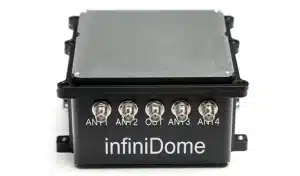
The GPSdome2 offers GNSS protection of two bands (L1/E1+L2 or L1 + G1 or L1/E1 + L5) from up to three directions of jamming simultaneously all in a small box

InfiniDome, an Israeli company specializing in advanced GNSS technologies and anti-jamming solutions, is presenting its newest anti-jamming solution, the GPSdome2.

According to InfiniDome, the GPSdome2 offers unmatched and flexible GNSS protection for two bands (L1/E1+L2, L1+G1, or L1/E1+L5) from up to three directions of jamming simultaneously, all within a compact unit. It is C-SWaP optimized (Cost, Size, Weight, and Power) and fully retrofittable, making it ideal for protecting almost any platform, including small Class II UAVs, without the need for major modifications.

אינפינידום GPS

Defensive NAVWAR – Article By Defense Update

infiniDome, an Israeli GPS protection specialist company, has introduced GPSDome, which uses two antennae to perform passive ‘null steering’ by attenuating the reception from the direction of the most powerful signal (the jammer). The company developed a proprietary filter to isolate this signal and implemented it into an integrated circuit.
The latest generation, GPSDome2, is a software-defined GNSS-AJ solution that offers a wider frequency range, higher efficiency, and the ability to simultaneously deal with multiple jammers from three directions. GPSDome2 is packed in a small package weighing only 500 gr. That can be installed as a retrofit or in new systems. Under a collaboration with Honeywell, the system has been integrated into Honeywell’s Resilient Navigation System, introduced in 2022 as an aviation-certified navigation system designed to overcome GNSS vulnerabilities. A similar system is under development in South Korea in cooperation with Hanwha, which has also invested in the company. Both are positioned to provide these navigation capabilities for the Autonomous Air Mobility systems. (AAM).

INFINIDOME (1) (1)

Interview By SafetyDetectives With Omer Sharar – Co-Founder & CEO of infiniDome

In a recent SafetyDetectives interview, Omer Sharar, co-founder and CEO of infiniDome, sheds light on the journey behind his company and the motivation that fueled its inception. With a background in Math and Computer Science, coupled with over a decade of experience as a SW Systems Engineer, Sharar unveils the critical role GPS technology plays in synchronizing essential networks. Highlighting a pivotal moment where the vulnerability of GPS systems became apparent, Sharar shares how this revelation spurred the creation of infiniDome, aiming to provide proportional defense solutions for critical applications such as UAVs and autonomous vehicles. Through innovative GPS protection and navigation resilience solutions, infiniDome strives to safeguard against Electronic Warfare attacks and ensure the reliability of navigation systems in today’s evolving battlefield landscape.

A bit about me, my name is Omer Sharar. I’m the co-founder and CEO at infiniDome. I am a Math and Computer Science BSc and MBA graduate, and I worked as a SW Systems Engineer for over 10 years in large and small companies.

My background in the GPS world comes from the critical infrastructure and timing world. GPS is used extensively for synchronizing critical networks (such as power grids, telecom, financial, defense networks), and I planned and deployed GPS-based time servers to sync them. One of my largest customers back then asked me, “How well does your solution cope, or bounce back from being jammed?” That was an eye-opening event for me because I realized that I could buy a GPS jammer for $50 that “kills” a $10,000 GPS-based time server from 100m away.

Looking for existing protection solutions (from great companies like Elbit, IAI, and more) led me to understand that they are almost entirely irrelevant – not only for the protection of time servers but even more so for mobility applications like UAVs and autonomous vehicles. These solutions were irrelevant primarily because of their large size, heavy weight, and above everything – their skyrocketing price. They are great for the protection of fighter jets, helicopters, and $30M UAVs but are not relevant for smaller applications – whether in the defense market or in the commercial\HLS markets.

Year of the Drone and UAV Tech Growth

2024: Year of the Drone and UAV Tech Growth

As we step into 2024, the landscape of unmanned aerial vehicles (UAVs), drones, and autonomous systems is experiencing unprecedented growth. This growth transcends the confines of traditional applications, heralding a new era, wherein the synergy between technological innovation and navigation precision is reshaping
both military strategies, and civilian enterprises.

Military Innovations: Advancing Beyond the Horizon

The defense sector continues pioneering in the deployment of UAVs, leveraging these assets to fortify national security as never before. Enhanced navigation systems, equipped with anti-jamming capabilities and advanced satellite communications, are enabling drones to execute missions with unprecedented accuracy and stealth. These advancements do not just augment military strength but also ensure operational safety in increasingly contested spaces. The evolution of UAVs in warfare highlights a shift towards intelligent and autonomous systems, capable of decisive actions in critical moments.
Defence spending on UAVs has consistently risen, with countries like the United States, China, and Russia leading the charge. The U.S. Department of Defense allocated approximately 9.39 billion USD for drone procurement, research, and development in its 2020 budget, a figure that was expected to increase as UAVs become integral to modern warfare.

Civilian Ventures: Drones for a Better Tomorrow

Beyond the battlefield, the civilian sector is experiencing a renaissance in drone applications, driven by leaps in navigation technology. From agricultural drones improving crop management through precise GPS mapping, to emergency response UAVs navigating challenging terrain to deliver aid, their impact is profound and far-reaching. The surge in e-commerce has also resulted in a significant uptick in the use of delivery drones, promising a future where logistics are redefined by speed and efficiency. These advancements are predicated on robust and reliable navigation systems, ensuring that drones can safely integrate into crowded airspaces and complex urban environments.
The agricultural drone market alone was forecasted to reach 5.19 billion USD by 2025, illustrating the significant impact of drones on precision farming and crop management.

The Sky is Just the Beginning

The exponential growth of UAVs, drones, and autonomous systems in 2024 is a testament to human ingenuity and the relentless pursuit of progress. As we continue to explore the boundless possibilities of these technologies, the significance of advanced navigation capabilities remains ever-present, guiding us towards a future where the sky is not a limit but a vast expanse of opportunities.

 
Infinidome Expands with New US Operations

Infinidome Expands with New US Operations

We’re Happy to Announces Expansion with New Operation in the United States, infiniDome USA.

infiniDome, the leading provider of GPS protection and resilient navigation solutions, proudly announces the further expansion of its operations with the establishment of infiniDome USA, a new subsidiary designed to enhance service to the United States defense industry and market in general.
This strategic move not only underscores infiniDome commitment to provide cutting-edge GPS protection solutions to a growing global clientele but also builds upon its existing presence and success within the U.S. market, where they already serve a significant and expanding customer base.
By establishing infiniDome USA, infiniDome aims to strengthen its relationships with U.S. customers, offering more localized support and ensuring that its innovative GPS protection technologies meet the specific needs and challenges faced by American aerospace and defense sectors.
This initiative reflects infiniDome’s recognition of the importance of the U.S. market to its global strategy and its dedication to securing GPS-reliant systems against increasing threats worldwide.
infiniDome innovative technology ensures the resilience and reliability of critical systems across various sectors including defense, timing systems, aviation, and autonomous vehicles.
“infiniDome establishment of a dedicated operation in the United States is a significant milestone in our mission to defend critical GPS-based systems and vehicles from attacks,” said Omer Sharar, CEO of infiniDome. “infiniDome USA will enable us to better serve our American customers, deliver our state-of-the-art GPS protection solutions more efficiently, and strengthen our partnerships across the U.S. industry and government” said Ben Sandford, president of infiniDome USA.
The decision to expand into the U.S. market reflects infiniDome’s recognition of the critical need for enhanced proportional GPS security measures amidst the growing threats to GPS-dependent technologies. In direct correlation to government and industry projects, calling for small, light, “attritable” drones, protection for such platforms also must be proportional in size, weight, and cost, which are infiniDome’s strengths.
infiniDome invites industry partners, customers, and the media to learn more about infiniDome USA and its advanced GPS protection and nav resiliency solutions at AUVSI Xponential 2024 in San Diego.

Aerial Photography Amid GNSS Disruption

Case Study: Aerial Photography Amid GNSS Disruption

Background:
The Oct. 7th conflict between Israel and Hamas poses significant challenges for manned aircraft operations throughout Israel. The disruptions and blockades not only jeopardize flight safety but also ground flights even in non-combat areas, leading to substantial revenue losses for aviation businesses. An Israeli company specializing in aerial photography using Cessna aircrafts, contact infiniDome for a customized solution as they were unable to complete missions for two months, causing a significant drop in revenue.

The Challenge:
Integrating our solutions into a manned Cessna 208B Caravan aircraft, which can fly at speeds of 185 knots and altitudes of 14,000 feet (higher than 4km), presented new challenges compared to tactical drones. This transition required technical adjustments to meet the specific physical and operational needs of a faster, higher-flying, manned platform. We focused on customizing the installation for this unique application, ensuring safety and reliability, without altering the aircraft’s configuration significantly.

The solution:
We integrated the GPSdome2 system with a special antenna plate to ensure optimal deployment on board and to minimize the need for aircraft configuration changes. Our field engineers provided customer support throughout the integration process and during flights, ensuring the best possible support was given. Due to the high altitude, the aircraft was more exposed to jammers, highlighting the necessity of the GPSdome2. This system offers dual-band protection from up to three jamming directions simultaneously for each band.

The results:
The installation of the GPSdome2 system yielded excellent results. Our solution reinstated the company’s ability to fly safely in areas previously inaccessible due to GNSS jamming and interference. This breakthrough restored the aircraft’s operational capabilities. As a result, the company could resume flights and once again complete photography missions, reinvigorating its income.
The successful deployment of the system on manned planes highlights infinidome’s relevance not only to the unmanned craft of the defense industry, but also for the private commercial sector.

Protecting Dual GNSS Receivers

Case Study: Protecting Dual GNSS Receivers

Background:
The Black-Eagle 50 E RUAV was designed for an advanced missions requiring high location precision. Since the beginning of 2023, Israeli airspace has been full of red and blue GNSS interference. These disruptions have only increased during the current conflict between Israel and Hamas. 

Heading data is vital for flight safety and successful completion of SIGINT and other special OPS missions, and can be received by a compass, a magnetometer, or by calculating the difference between 2 onboard GNSS receivers. Applications that calculate the difference between 2 onboard GNSS receivers and wish to ensure optimal performance, require protection of both of the GNSS receivers.

The Challenge:
The lack of reliable heading data due to GNSS signal disruption threatened the safety and completion of flight missions.  

Furthermore, the need to synchronize two distinct GNSS receivers onboard presented a technical difficulty. This synchronization was essential to maintain accurate and repeatable performance, which was critical for precisely calculating the heading (HDG).

The Solution:
To resolve this issue, we integrated the Black-Eagle 50E platforms with two of our GPSdome 1.03 systems with two antennas connected to each; thus ensuring both receivers get stable and precise GNSS signals.
Our team was hands-on throughout the integration process, including antenna placement, conducting on-site EW tests, and providing technical support as needed.

The Result:
The implementation of heading protection allowed the Black-Eagle 50Es to perform missions with enhanced safety and precision. Our customer reported being able to operate in jammed areas, in which they were unable to operate previously due to GNSS interference. 

Our protection systems provided the Black-Eagle 50E the capability to execute missions with greater safety and accuracy.
Since our GPSdome 1.03 C-SWaP solution is light weight, small size and consumes minimum power, it had a minor impact on the Black-Eagle 50E’s endurance and its payload capacity.
The integration was smooth and utilized advanced 3D Printed brackets for mounting, ensuring the basic configuration of the platform remained unaltered.

Case Study: HIGH-END LOW-COST GNSS Protection for OWM Drones

Background:
Reliable navigation during GNSS disruptions is of paramount importance in an era where the use of unmanned aerial vehicles,specifically Loitering Munitions designed for one-way missions, continues to grow. infiniDome’s innovative GNSS protection system has been seamlessly integrated into printed aerospace drones. The Size, Weight, Power and Cost (SWaP-C) of GPSdome was vital for this
kind of need.

The challenge:
Operating drones in conflict areas requires protection of the vehicle’s navigation system.
UAVs and drones deployed on One-Way Missions (OWM) in conflict areas, cannot afford to incorporate expensive solutions. They need to be as low-cost and lightweight as possible to minimize the impact on their payload capacity.

The Solution:
We conducted a joint integration with the customer in advance of rigorous field trials in Poland. The testing involved two drones: one equipped with the GPSdome 1.03 system and the other vulnerable with no GNSS protection., Both used the same GNSS receiver and navigated through the same jamming area.

The Position Loader is easy to deploy before take-off, and easy to pack and store within the belly of the helicopter, requiring the simplest technical procedures.
As part of the development process, we designed a dedicated flight test unit for the technical team. 

The Results:
The field test in Poland was critical in demonstrating the effectiveness of GPSdome in real flight conditions.

Launched simultaneously into a GNSS jamming area, the two drones provided a stark contrast in operational capability. The GPSdome-equipped UAV navigated the disruption area without significant performance degradation, however the UAV without GPSdome protection lost all SAT signals and auto-landed immediately at the first indication of jamming. The GPSdome ensures better navigation abilities for loitering Munitions even in the most hostile environments.

Fast GNSS for Search and Rescue

Case Study: Fast GNSS for Search and Rescue

Background:
UH-60 Black Hawk Helicopters are multi-mission platforms, used for Search and Rescue, force mobilization, and other crucial tasks.
Since the beginning of the Oct. 7th conflict, these platforms have been in high demand.
While every minute counts, GNSS interference causes takeoff delays and complicates search and rescue operations for those injured on the battlefield.
infiniDome identified the problem and developed a new and innovative product to assist Black Hawk Helicopters by quickly and accurately logging preflight position data, even in the most challenged GNSS environments.

The challenge:
To complete preflight preparations, the helicopters required an initial GPS fix. Under GNSS interference, the location-fix process takes longer, and could even be impossible.
To enable the Black Hawks to takeoff as quickly as possible, we needed to provide externally clear GNSS signals from a “suitcase” style form factor that enabled rapid plug-in and disengagement from the helicopter.

The Solution:
We developed the GPSdome2 Position Loader – an independent unit that can be easily deployed next to the Black Hawk to ensure the reception of GPS signals. The design resulted in a stand-alone system without any power or data connections. 

The Position Loader is easy to deploy before take-off, and easy to pack and store within the belly of the helicopter, requiring the simplest technical procedures.
As part of the development process, we designed a dedicated flight test unit for the technical team. 

The Results:
The GPSdome2 Position Loader significantly reduced the time needed for getting the GPS fix, enabling immediate take-off, thus leading to more efficient rescue operations and many saved lives.
In Search and Rescue missions, time is of the essence. infiniDome  technology ensures that first responders have time on their side.

The Power of Purchasing Locally

The Power of Purchasing Locally

infiniDome is taking a strategic approach to redefine the essence of business operations by emphasising the importance of buying locally and providing localised support. Committed to bolstering the local economy and providing immediate and accessible assistance to our clients, infiniDome USA is leading by example in the waytech firms can thrive while fostering community connections and resilience. Adding to our commitment to support and secure operations within the United States, infiniDome proudly announces its compliance with the National Defense Authorization Act (NDAA), ensuring that our products meet the stringent requirements of national security and defence.

Now It’s Easier

In addition to bolstering the local economy and reinforcing security commitments, buying locally offers the significant advantage of streamlining operations with less bureaucracy and simplifying import processes. When infiniDome sources products and services within the USA, it eliminates the often cumbersome and time-consuming tasks associated with international procurement, such as navigating customs regulations, dealing with import duties, and managing longer lead times.

This allows us to deliver innovative solutions to our clients while enhancing our flexibility, enabling us to respond in real-time to market demands and customer needs. The reduced bureaucratic overhead and avoidance of complex import processes, highlight our commitment to efficiency and customer satisfaction, further emphasising the intrinsic value of local purchasing.

The Impact of Buying Locally 

A pillar of infiniDome USA’s operations is understanding the critical nature of reliable and timely support for our products. This ensures that assistance is only a call or a message away, providing our customers with the peace of mind that stems from knowing help is readily available. Our local support team is comprised of experts who are both familiar with our products and understand the unique challenges and needs of the American market.
This expertise enables us to offer tailored solutions, and swift resolutions to any issues that may arise.

The Advantage of a Local Contact 

Having a local contact in the USA means that infiniDome is directly accessible to our clients, allowing real-time communication and interaction. This close proximity enhances our responsiveness, enabling us to troubleshoot problems and provide efficient consults.
Additionally, the presence of a local contact facilitates deeper relationships with our clients and a better understanding of their operations.

This approach not only improves customer satisfaction, but also allows us to improve our products and services.

NDAA Compliance: A Commitment to Security

infiniDome’s compliance to NDAA standards highlights our commitment to national security, and protection of critical infrastructure. By ensuring that our products and services meet NDAA rigorous standards, we aim to assure our clients that their operations are supported by high-quality technology, while being aligned with national security protocols.  Such compliance is a testament of our dedication to maintaining the highest levels of integrity and reliability in our products and services, further establishing infiniDome as a trusted partner in the defense sectors.

infiniDome USA at AUVSI Xponential

infiniDome USA at AUVSI Xponential 2024 – Meet Us in San Diego!

We are proud to announce our participation in AUVSI Xponential 2024, the largest global gathering of leaders in unmanned systems, robotics, and autonomy.
Join us this April in San Diego, where we’ll showcase our latest Anti-Jamming solutions.

📅 Date: April 22-25
📍 Location: Booth 5111, San Diego Convention Center, San Diego, CA

We are proudly announcing the further expansion of our operations with the establishment of infiniDome USA, a new subsidiary designed to enhance service to the United States defense industry and the commercial sectors.

This strategic move not only highlights infiniDome’s commitment to provide cutting-edge GPS protection solutions to a growing global clientele, but also builds upon its existing success within the U.S. market, in which we currently serve a significant and ever-expanding customer base.

By establishing infiniDome USA, infiniDome aims to strengthen its relationships with U.S. customers, offering more localized support and ensuring that its innovative GPS protection technologies meet the specific needs and challenges faced by American aerospace and defense sectors.

This initiative reflects infiniDome’s recognition of the importance of the U.S. market to its global strategy, and its dedication to securing GPS-reliant systems against increasing threats worldwide.

Discover Our Latest in Anti-Jamming Technology

At Xponential 2024, we invite you to discover our latest innovations in Anti-Jamming solutions. Our team has been hard at work developing technologies that ensure operational continuity and integrity for critical infrastructure, defense, homeland security, and commercial applications.
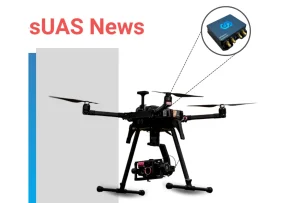
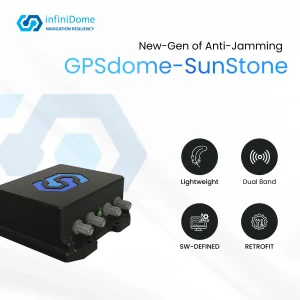
Visit our booth to experience firsthand how infiniDome leads the wayin safeguarding the future of autonomous and GPS-dependent technologies.

 Schedule a Meeting

Interested in a deep dive into our technology or discussing partnership opportunities? Schedule a meeting with our experts at AUVSI Xponential 2024.

Stay Connected

Don’t miss out on any updates leading up to the event! Follow us on Social Media for real-time announcements, insights, and more from the infiniDome team.

We’re looking forward to meeting you in San Diego and sharing how our innovative solutions are shaping the future of GPS security.

The Rising Threat of GPS Jamming

The Rising Threat of GPS Jamming: Impacts and Solutions

In recent years, GPS jamming has emerged as a significant challenge, affecting not just military operations but also civilian navigation and safety.

This section delves into the latest incidents of GPS jamming, exploring its potential sources and the wide-ranging effects. Discover how industries and governments worldwide are responding to mitigate these threats and to ensure their navigation capabilities.

Navigating the GPS Jammed Battlefield in Conflict Zones

Ukraine: Amid the ongoing conflict with Russia, Ukraine has faced numerous GPS jamming incidents aimed at disrupting the Ukrainian military’s navigation capabilities. These jamming attacks have been reported to affect not only military drones but also civilian communication and navigation systems, illustrating the wide-reaching impact of electronic warfare in the region. The use of jamming techniques has been part of broader hybrid warfare tactics, complicating efforts to maintain situational awareness and coordinate defense operations.

Baltic Countries: In the face of escalating tensions in Eastern Europe, the Baltic countries have witnessed a series of sophisticated GPS jamming incidents, attributed to efforts aimed at undermining regional security and NATO’s operational effectiveness. These countries, strategically positioned at the forefront of NATO’s eastern defense line, have become testbeds for electronic warfare tactics, including disruptive GPS interference. Such incidents have not only challenged military exercises and readiness, but also posed risks to civilian aviation and maritime safety. These risks emphasize the urgent need for advanced countermeasures, including international collaboration, in order to maintain the security of critical navigation systems against the invisible threats of modern warfare.

Israel: Since the Oct. 7 attack, GPS jamming has occurred throughout Israel. The Israeli Defense Forces have acknowledged that these incidents were intentional military operations, attempting to thwart drone and unmanned aircraft attacks planned by Hamas and Hezbollah. Such an approach is aimed at countering threats and maintaining the tactical advantage in a region marked by persistent tensions and conflict.

Military Moves: UAVs Changing the Game

In response to the increasing prevalence of GNSS jamming attacks, militaries around the globe are taking proactive provisions to adapt and enhance their abilities to safeguard military operations while maintaining the strategic advantage. This evolving landscape has seen significant developments, including Ukraine’s bolstered defenses through international solidarity. In a remarkable step, NATO Secretary General Jens Stoltenberg announced that Ukraine will receive one million drones from its allies in 2024, highlighting the crucial role of unmanned systems in modern warfare and reconnaissance missions amidst ongoing conflicts.

Similarly, the United Kingdom has taken decisive steps to fortify its armed forces against sophisticated threats. The UK Ministry of Defence has committed to invest five billion GBP in drones, aiming to significantly expand its UAV fleet. This investment is part of a broader strategy designed to enhance the UK’s defense capabilities and ensure operational superiority in an era wherein electronic and GPS jamming tactics have become increasingly common.

 The intersection of these developments points to a future where the ability to navigate precisely and resist electronic disruptions will be paramount. Therefore, advancing navigation resilience and anti-jamming technologies has never been more crucial. As nations navigate the complexities of contemporary conflicts and strive for superiority in the digital battlefield, the investment in and enhancement of navigation capabilities will undoubtedly play a pivotal role. The path forward is clear: bolstering our navigation systems is not just a matter of technological advancement, but a strategic imperative that underpins the future of global security and defense strategies.

GNSS Satellites

GNSS Satellites: Challenges of Signal Jamming

In the vast expanse of space, a network of satellites orbits our planet, providing the critical data needed for global navigation, these satellites, part of the Global Navigation Satellite System (GNSS), are the unsung heroes behind the precise positioning and timing information that powers everything from the smartphone in your pocket to the unmanned aerial vehicles (UAVs) soaring above.
Understanding how GNSS satellites work and their distinction from other orbital companions is essential in appreciating their role in our daily lives and the challenges they face.

GNSS is a term that encompasses various satellite constellations, including the United States’ GPS, Russia’s GLONASS, the European Union’s Galileo, and China’s BeiDou, These systems operate by sending signals from space to receivers on the ground, allowing devices to calculate their precise location through a process known as trilateration, By measuring the time it takes for the signal from at least four satellites to reach the receiver, GNSS can pinpoint a location anywhere on Earth with remarkable accuracy.
This capability is pivotal for a myriad of applications, from navigation and mapping to timing and disaster response.

What sets GNSS satellites apart from their orbital counterparts is their specific purpose of providing positioning, navigation, and timing (PNT) services on a global scale, while other satellites may be dedicated to communication, weather monitoring, or scientific research, GNSS satellites are uniquely designed and positioned to cover the entire globe, ensuring that PNT services are available to users anywhere, anytime. This universal coverage is critical for the functioning of modern technology and international infrastructure.

Despite their advanced technology and crucial role, GNSS signals are inherently weak by the time they reach the Earth’s surface. This low signal strength makes them susceptible to interference, whether unintentional from sources like radio towers or intentional through jamming devices, jamming attacks involve broadcasting signals at the same frequency as GNSS satellites, overwhelming the receiver with noise and making it impossible to discern the authentic satellite signal. This vulnerability is particularly concerning for operations reliant on precise timing and location.
When UAVs or other unmanned vehicles are jammed, the consequences can be dire, these applications depend heavily on GNSS for navigation and control.
A successful jamming attack can render them unable to maintain their course, leading to loss of control, potential crashes, or failure to complete critical missions such as emergency medical deliveries or search and rescue operations.

The growing awareness of GNSS vulnerabilities has spurred efforts to enhance the resilience of these systems, measures such as anti-jamming technology, the development of alternative PNT solutions, and international cooperation are vital in safeguarding GNSS services.
As we continue to rely more on GNSS for a wide range of applications, ensuring the security and reliability of these satellite signals is paramount.

In conclusion, GNSS satellites play an indispensable role in modern navigation and timing, setting them apart from other types of satellites orbiting our planet, however, their susceptibility to jamming attacks presents a significant challenge, particularly for UAV operations.
As technology advances, the quest to protect and strengthen these critical assets continues, ensuring that GNSS remains a reliable foundation for global navigation and beyond.

GPS Jamming Attacks on Unmanned Systems

The Consequences of GPS Jamming Attacks on Unmanned Systems

Picture a world where the guiding intelligence of drones and UAVs is abruptly silenced, their navigational prowess rendered useless – a scenario that is part of the reality because GPS jamming attacks.

The prevalence of GPS jamming attacks poses a significant threat to unmanned aerial vehicles (UAVs) and drones, and any other applications that depend on GNSS signals to navigate, disrupting their navigation capabilities with potentially severe consequences.
When subjected to a jamming attack, these devices lose their ability to receive accurate positioning data, leading to complete loss of control.

In real-world scenarios, a drone or UAV experiencing a jamming attack may deviate from its intended course, endangering both the equipment and any payload it may carry.
Moreover, the loss of navigational control can impact critical missions, including surveillance, reconnaissance, and emergency response operations,
The consequences extend beyond financial losses to potential security risks, making it imperative for industries relying on unmanned systems to address the vulnerabilities associated with GPS disruptions.

To mitigate the risks, investing in GPS protection and resilient navigation solutions is crucial. These technologies not only detect and counteract jamming attempts but also ensure the continuity of operations that can be and will be a game changer.

The urgency to enhance GPS resilience stems from the growing reliance on unmanned systems in critical sectors, including transportation, agriculture, and public safety. As these systems become more integrated into our daily lives, the potential fallout from GPS disruptions becomes increasingly severe. For instance, in agriculture, drones are used for precision farming, monitoring crop health, and optimizing resource allocation. A GPS disruption could lead to misapplication of resources, affecting crop yields and sustainability.
In public safety, drones play a pivotal role in search and rescue missions, where timing and precision are paramount, GPS jamming in such scenarios could delay response times and potentially result in loss of life. Thus, developing and implementing advanced GPS protection measures is not just about safeguarding equipment; it’s about ensuring that critical services and operations continue uninterrupted, protecting both economic interests and human lives. Investing in technologies that can withstand GPS vulnerabilities is essential for maintaining the integrity and reliability of these indispensable systems, marking a significant step forward in securing the future of unmanned navigation and the myriad applications that depend on it.

Understanding the Crucial Role of GPS in Navigation (1)

Understanding the Crucial Role of GPS in Navigation

In the dynamic landscape of modern navigation, the guiding of drones, UAVs, and ground vehicles with unparalleled precision is the Global Positioning System (GPS).

Global Positioning System (GPS) technology has become an integral part of modern navigation systems, revolutionizing the way we guide drones, UAVs, and ground vehicles.
The importance of GPS lies in its ability to provide accurate location data, enabling seamless navigation in various industries.

GPS works by utilizing a network of satellites orbiting the Earth, communicating with ground-based receivers to triangulate the device’s position.
In essence, GPS relies on trilateration, a method that calculates the user’s location based on signals received from multiple satellites,
This technology has become indispensable in applications ranging from civilian navigation to military operations. However, despite its widespread use, GPS is not without vulnerabilities.
It operates on radio signals, making it susceptible to interference, jamming, and spoofing.

The critical role of GPS extends beyond basic navigation, significantly enhancing the operational capabilities of drones, UAVs, and ground vehicles.
This technology enables these vehicles to perform complex missions with a high degree of accuracy and autonomy. For instance, in military operations, GPS is essential for the precise targeting of locations, navigation through challenging terrains, and coordination among multiple units. Similarly, in civilian applications, drones rely on GPS for tasks ranging from aerial photography to delivering goods in hard-to-reach places. The accuracy and reliability of GPS data are paramount, as they directly impact the success of these missions. As such, the integration of GPS into these systems has not only expanded their operational possibilities but also increased their efficiency and safety.

Furthermore, the evolution of GPS technology continues to push the boundaries of what is possible with autonomous and semi-autonomous vehicles. With advancements in GPS accuracy and the development of augmentation systems that improve signal reliability, vehicles are now capable of navigating more precisely in complex environments. This progress is crucial for the future of autonomous cars, drones, and other types of robotic vehicles, enabling them to operate safely alongside human-driven vehicles and in densely populated areas. The enhanced capabilities afforded by GPS technology are leading to innovative applications in environmental monitoring, search and rescue operations, and smart city infrastructures, demonstrating the technology’s indispensable role in the next generation of navigation and mission planning.

As technology advances, the need for resilient and protected GPS navigation systems becomes increasingly apparent. Ensuring the reliability of GPS is crucial for maintaining the integrity of operations in sectors such as defense, logistics, and autonomous transportation.

INFINIDOME KAN 11

Kan 11 News Features Our Innovative Journey – Discover How We’re Changing The Game in Anti-jamming

The Kan 11 News team visited our offices to discuss the escalating issue of GPS jamming in Israel, a consequence of the ongoing Israel-Hamas conflict. We explored how infiniDom’s innovative solutions provide proven protection against GPS interference.

InfiniDome Raises $9M Series

InfiniDome Raises $9M Series A, Led by South Korean Giant Hanwha Aerospace to Bring Navigation Resiliency to UAS and Vehicles in Defense and Commercial Markets

CAESAREA, Israel–(BUSINESS WIRE)–infiniDome, a leading provider of anti-jamming solutions, has secured $9M in Series A funding led by Hanwha Aerospace, one of the largest conglomerates in South Korea, alongside Honeywell Ventures, and Next Gear Ventures.

Israel’s GPS warfare aims to keep its own drones flying and enemies baffled - AFP

Israel’s GPS warfare aims to keep its own drones flying and enemies baffled – AFP

Local start-up has been supplying the military with means to handle Hamas GPS jamming; the country has also apparently been working to confuse opponents’ navigation systems

infiniDome expands operations to the US - GPS World

infiniDome expands operations to the US – GPS World

infiniDome, a provider of GPS protection and resilient navigation solutions, has opened infiniDome USA, a new subsidiary designed to enhance service to the United States defense industry.

Thank_you_Xeo_Air_Inc._for_doing

Xeo Cast LIVE @ AUVSI Xponential – Orlando, 2022

Interview with Omer Sharar, CEO – infiniDome

Volatus_Aerospace_to_Offer_Full_Throttle_Aerial_UAVs

Volatus Aerospace to Offer Full Throttle Aerial UAVs

Full Throttle Aerial’s heavy lift, high endurance, robust drones are designed for infrastructure inspection and cargo delivery

Case_Study__Coping_With_Our_GPS_Threatened_World

Case Study: Coping With Our GPS Threatened World

Cyber shield solutions provider infiniDome ensures continuity of autonomous navigation and operation under GPS-challenged..

Its_not_just_the_Airport._for_doing-1

It’s Not Just the Airport: GPS Jamming Is Affecting People All Over Israel

Israeli farmers and professional drone operators complain of GPS disruptions to critical systems as jamming increases across the Middle East..

The_Current_and_Future_Risks_of_GPS_Jamming_for_Drone_Technology_and_How_to_Prevent_an_Attack

The Current and Future Risks of GPS Jamming for Drone Technology and How to Prevent an Attack

The Current and Future Risks of GPS Jamming for Drone Technology and How to Prevent an Attack

Massive_GPS_Jamming_Observed_Around_Israel._Are_Anti-drone_Weapons_to_Blame

Massive GPS Jamming Observed Around Israel. Are Anti-drone Weapons to Blame?

New website maps severe GPS disruptions in eastern Med

  • Aviation watchdog blames drone warfare
  • IDF: ‘We are acting in a range of ways, others also defending themselves’
  • Russia deployed similar system in Syria
The-Vertical_Space

The Vertical Space

A podcast at the intersection of technology and flight. Here we discuss the most important forces shaping the market of advanced air mobility, with a particular focus on why and how they matter to those building a business in this very exciting and growing industry.

Protection Has
a New Glow

Join the Early Access Program and be among the first to experience the next generation of GNSS protection

We don’t track your cookies. So you can cheat on ‘em while visiting our site.
cookie-monster-sesame-253x300