
Background:
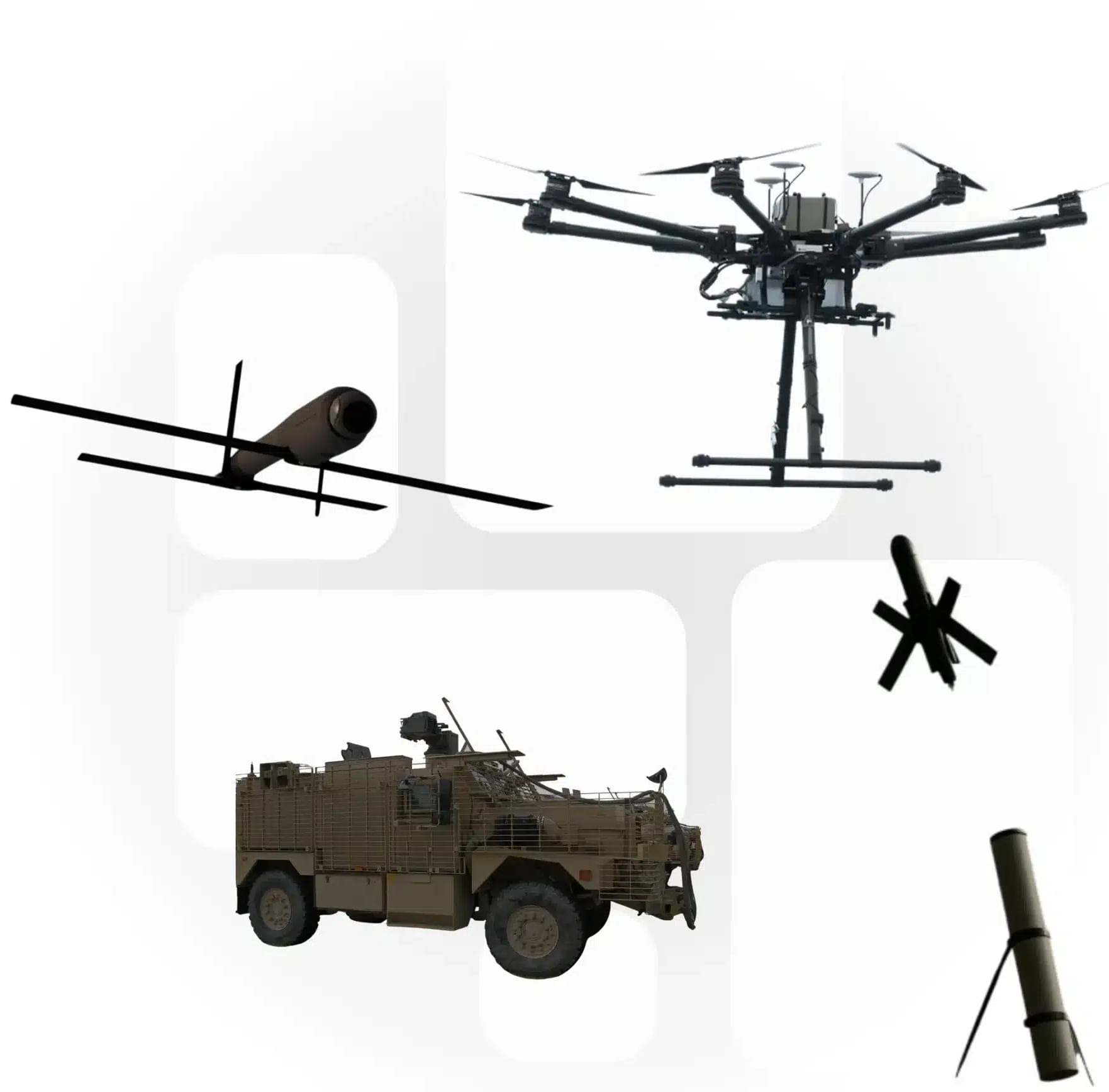
The Indian Army is investing heavily in unmanned aerial, ground, and maritime platforms for intelligence, reconnaissance, surveillance and strike missions.
As these capabilities evolve, so do the threats against them. High-value targets are often protected by advanced electronic warfare systems, including GNSS jammers designed to prevent autonomous platforms from reaching or operating in the target area.
A demonstration was conducted in India for the Indian Army to prove that autonomous systems can complete their mission even under heavy GNSS interference and complete GNSS denial.
The Challenge:
Modern military missions require unmanned platforms to maintain accurate navigation all the way to the target, even in areas protected by strong GNSS jamming.
Traditional anti-jamming systems can extend operational range and delay GNSS loss, but in severe environments, GNSS may still become entirely unavailable. At that point, conventional navigation can fail, causing route deviation, loss of mission accuracy, failsafe activation, or mission abort.
For the Indian Army, the requirement was not only to protect GNSS signals, but to ensure uninterrupted mission continuity even after complete GNSS loss.
The Solution
The system selected for the demonstration was IroNav – a joint solution developed by Wonder Robotics and infiniDome.
IroNav combines two complementary layers:
GNSS Protection with SunStone
infiniDome’s SunStone anti-jamming system protects GNSS signals in real time using null-steering technology. This particular system was configured to protect both L1 and L2 frequencies. By filtering interference and preserving satellite reception, SunStone enables the platform to operate deeper into the jamming zone and closer to the target.
GNSS-Independent Navigation with OptiPilot
When GNSS becomes unavailable, IroNav automatically transitions to Wonder Robotics’ OptiPilot system – a vision-based navigation solution that enables autonomous navigation, guidance and landing without GNSS, external operators, or preloaded maps.
The Result
The drone completed the assigned autonomous mission under three jamming scenarios: mid-flight GNSS denial, full-flight GNSS denial, and variable jamming levels simulating battlefield conditions.
In all scenarios, IroNav maintained continuous operation and transitioned seamlessly between GNSS reception, GNSS protection, complete GNSS denial, and optical navigation.
Throughout the tests, the drone maintained a positional deviation of only 1-4 meters from the true GNSS position, even when satellite reception was completely lost.
The platform successfully demonstrated fully autonomous flight, continued navigation under active GNSS jamming, seamlessly transitioned to optical navigation and stable operator-controlled flight inside the denied zone.